A build that completes without errors is not necessarily reproducible. If the same product source and configuration produce different binaries on another machine—or months later—the team may struggle to identify what changed in a security update or field release.
The Yocto Project defines reproducibility as producing the same binary output from a given input configuration regardless of when or where it is built, including filesystem path and host environment. Its test manual strongly advises projects to verify reproducibility before finalizing production images, rather than waiting until an urgent update is needed.
Why it matters after shipping
Imagine rebuilding a product to address a vulnerability long after its original release. If unrelated components also change at the binary level, engineers need to spend more time determining what actually changed and what must be revalidated. Reproducibility makes that comparison clearer and can improve confidence in the release process.
Yocto’s documentation points to several contributors: stable path mappings, explicit recipe dependencies and configuration, isolated recipe sysroots, controlled host tools, and building images from the packages they actually depend on. A clean build is useful, but reproducibility requires controlling the inputs that influence it.
Make it an engineering test
- Record the metadata revisions, configuration, toolchain and host environment used for a release.
- Build the same inputs in a second path or controlled environment and compare outputs.
- Investigate timestamps, host autodetection and undeclared dependencies when outputs differ.
- Keep CI logs and artifact hashes so the comparison can be repeated.
- Run the reproducibility check before a product release, not only after a problem appears.
Reproducible output does not prove a system is free of vulnerabilities or that its configuration is correct. It does give teams a stronger way to answer a crucial maintenance question: can we reconstruct what we shipped from the source and build inputs we recorded?
For devices expected to receive long-term updates, that capability is part of release readiness—not a nice-to-have build-system experiment.
Sources
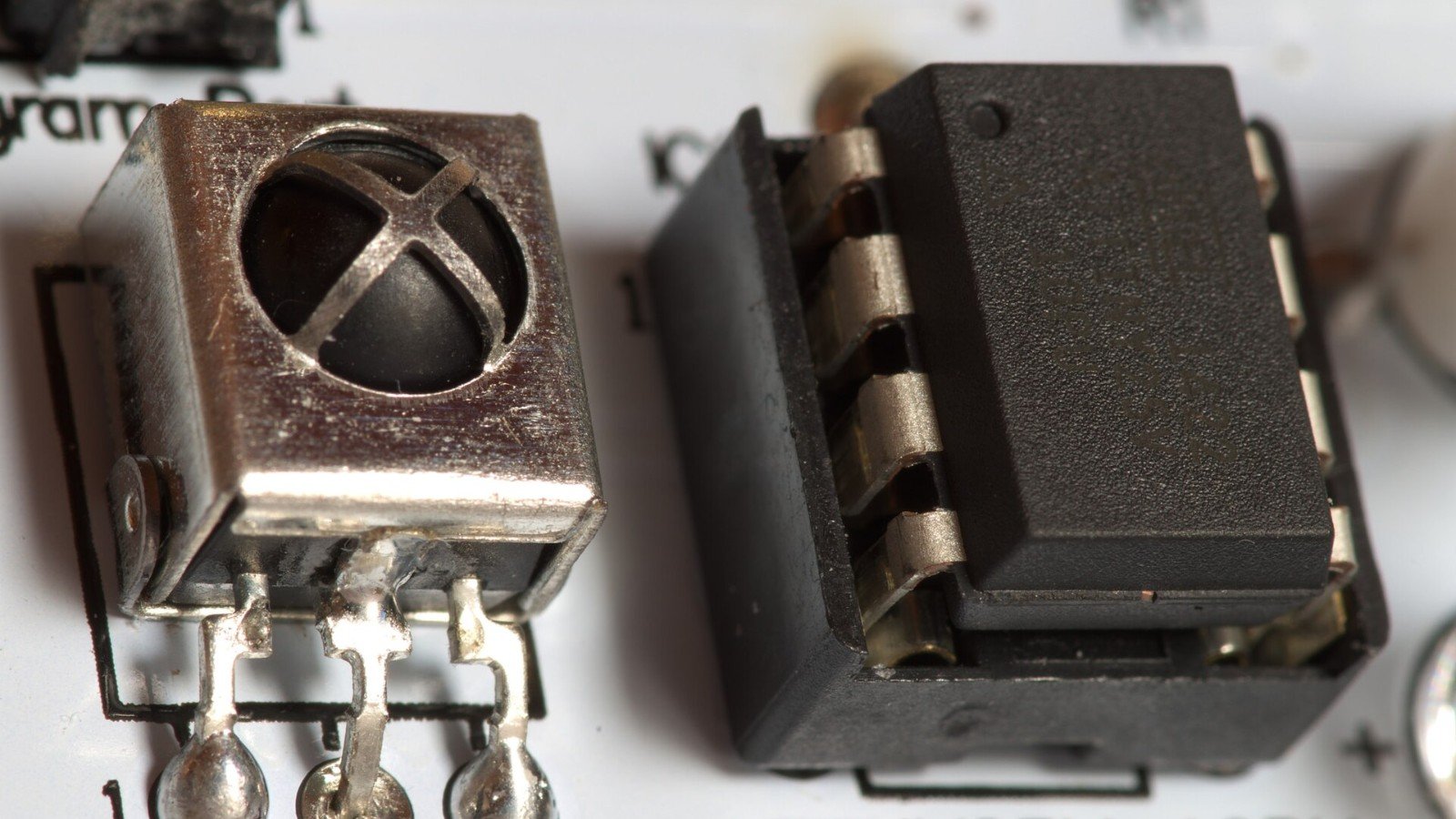
Featured image credit: Illustrative circuit board photo by Samtoucan via Wikimedia Commons, CC BY-SA 3.0. Cropped to 16:9. Source.