When a microcontroller project needs precise timing or direct peripheral control, it is tempting to start by writing to registers. Raspberry Pi’s Pico SDK offers a more structured starting point for RP-series boards: headers, libraries and a build system for C, C++ and assembly, plus APIs for accessing the hardware.
The SDK repository describes libraries for timers, synchronization, PIO, USB, multicore programming and networking features where the board supports them. Its goal is to make common hardware operations accessible without forcing application code to use raw register addresses for every task.
Start at the SDK layer, then go lower if needed
For a first project, use the board and platform settings and build a known example. Raspberry Pi’s example repository says most examples apply to both RP2040- and RP2350-based boards, while chip-specific examples may only build on one platform. A board selection such as Pico 2 can select the RP2350 platform automatically.
PIO is a good example of why the SDK is useful. It gives a dedicated programmable I/O subsystem and software support for loading and coordinating programs. This can help with timing-sensitive interfaces, while keeping most application code in a familiar C/C++ project structure. The SDK also exposes multicore and synchronization facilities, which should be used with clear ownership rules for shared state.
A practical learning path
- Install the SDK and toolchain using the official getting-started documentation.
- Build and flash a simple serial or GPIO example for your exact board.
- Study one peripheral example that matches your project, such as PIO or USB.
- Use SDK APIs first; consult register definitions when the API does not meet a measured requirement.
- Keep the board selection and SDK revision pinned so another developer can reproduce the build.
Remember that wireless examples are only relevant to boards with the required radio hardware. The Pico SDK is a development framework, not a guarantee that every Pico-family board has identical peripherals.
For new developers, the best payoff is often not a clever register trick. It is getting a small program, board configuration and build environment working repeatably before adding complexity.
Sources
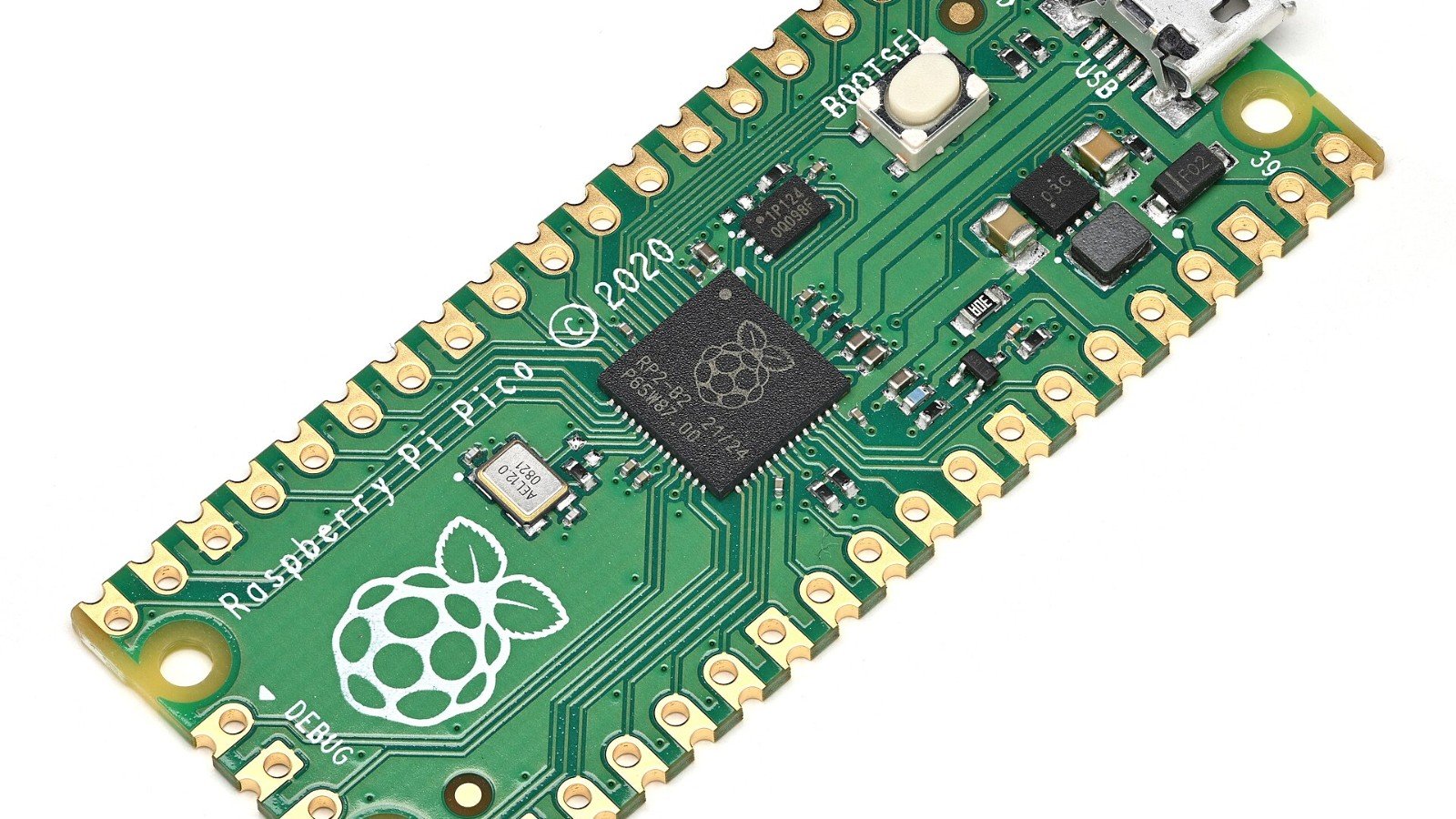
Featured image credit: Raspberry Pi Pico photo by Phiarc via Wikimedia Commons, CC BY-SA 4.0. Cropped to 16:9. Source.

Leave a Reply