
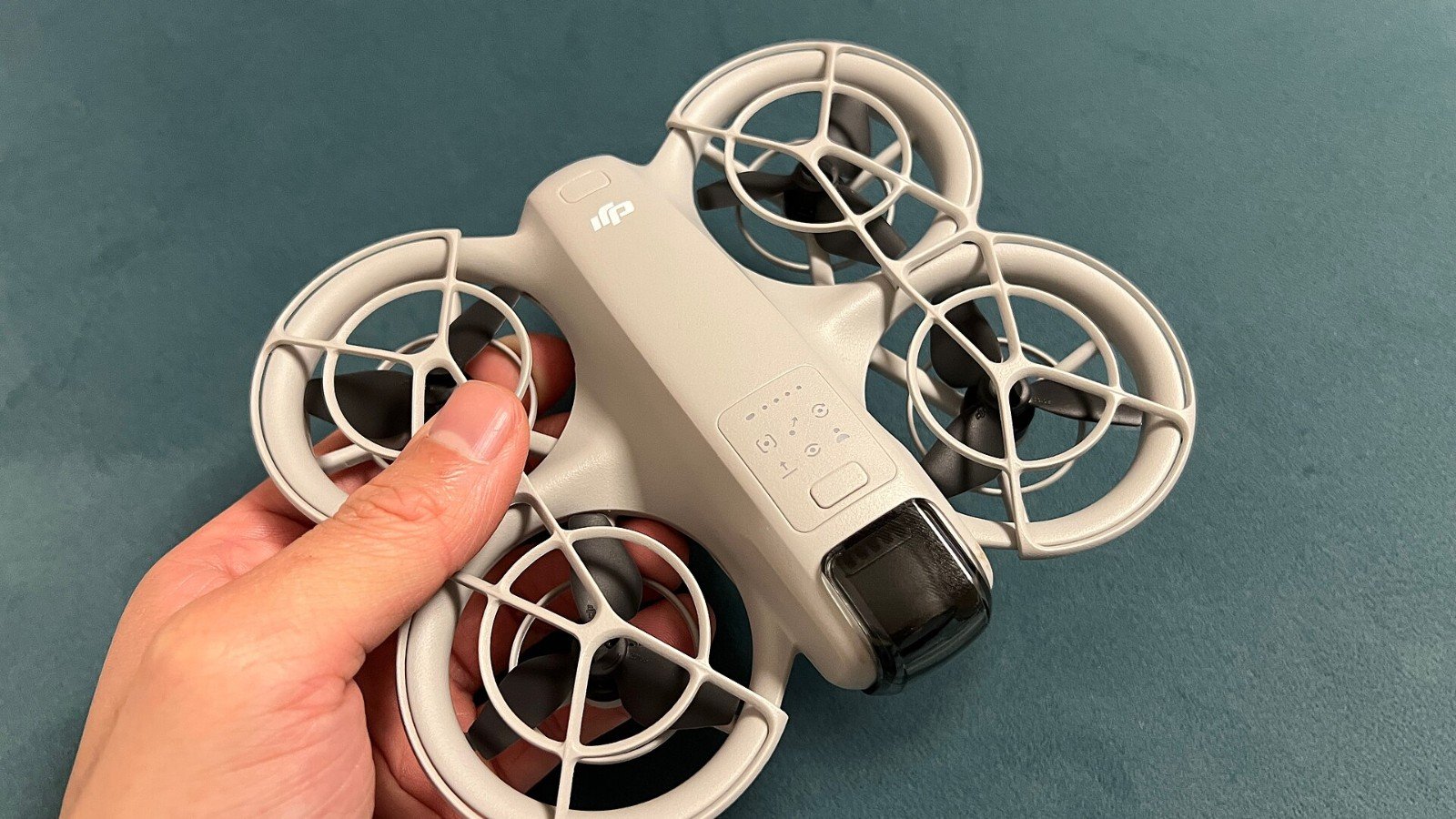
“Up to 18 minutes” sounds like a flight plan. It is not. DJI lists the Neo’s maximum flight time as approximately 18 minutes, or approximately 17 minutes with propeller guards, but its own footnote explains the conditions: controlled, windless-equivalent testing, a steady 2 m/s flight and battery use down to a forced landing.
Why your real session will be shorter
Wind, repeated acceleration, cold or hot weather, firmware, battery condition and the way you fly all affect usable time. DJI explicitly says actual results may vary with environment, usage and firmware. A test that ends at forced landing is a poor target for a real outing: you need margin to return, avoid obstacles and land safely.
Before each flight, check the battery and aircraft warnings, plan the landing point, and set a return threshold that leaves a conservative reserve. Do not start a distant shot just because the spec sheet shows a long maximum. If conditions worsen, land early rather than trying to capture one more clip.
Separate flight time from flight distance
DJI also publishes a maximum distance measured under a different controlled test. It is not a recommended operational range. Radio interference, local rules, visual-line-of-sight requirements and the control method can make a much shorter range appropriate or mandatory.
Practical takeaway: Use manufacturer test numbers to compare products, then plan real flights with a safety buffer. Check the current specs and manual for your firmware and configuration; never plan to land only when the battery is empty.
Official sources
DJI: Neo specifications and test conditions
Featured image: NAN LIU via Wikimedia Commons, CC BY-SA 2.0. Image source and license.
Leave a Reply