Learn the essentials of Linux Kernel Architecture, including design, components, and real-world applications explained in a simple beginner-friendly
The Story Begins…
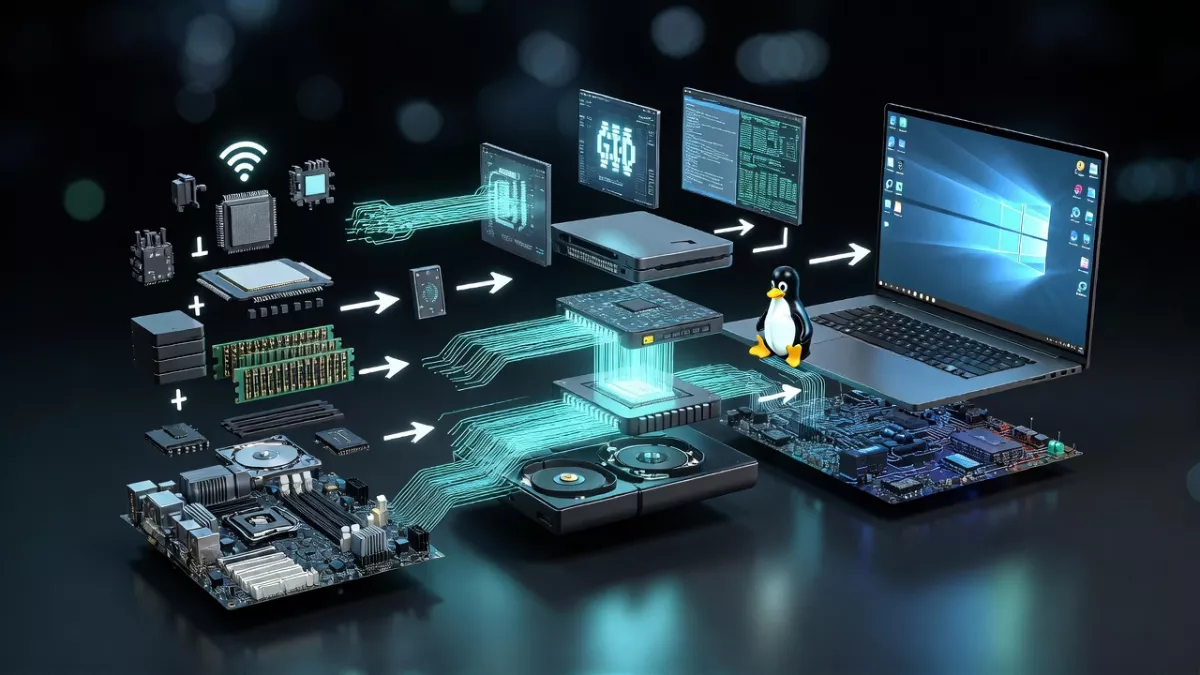
Imagine a young engineer, curious about how her laptop boots up every morning. She presses the power button, the screen glows, and within seconds, the Linux operating system is ready. But behind that smooth startup lies the Linux kernel architecture, quietly orchestrating every hardware and software interaction.
Like the conductor of a grand orchestra, the Linux kernel ensures that memory, CPU, files, and devices work in harmony. Understanding its architecture is not just for experts—it’s the foundation for anyone who wants to dive into systems programming, embedded development, or operating system design.
In this article, we’ll break down the essentials of Linux kernel architecture in a beginner-friendly way, covering its structure, components, and real-world importance.
What is the Linux Kernel?
The Linux kernel is the core of the Linux operating system. It acts as a bridge between hardware and software, managing resources like CPU, memory, and devices while providing essential services to user applications. You can explore the full source code of the Linux kernel on GitHub to understand its architecture and contribute to this open-source project.
Without the kernel, your applications would have no way to talk to hardware components.
Essentials of Linux Kernel Architecture
1. Monolithic Kernel Design
The Linux kernel follows a monolithic architecture. This means most of the operating system services—like process management, memory management, and device drivers—run in the kernel space.
- Advantage: High performance due to direct communication.
- Trade-off: A bug in one module can affect the whole system.
2. Kernel Space vs User Space
- Kernel Space: The privileged mode where the kernel executes critical operations.
- User Space: Where applications run, isolated from the kernel to ensure stability.
This separation ensures security and prevents faulty apps from crashing the entire system.
3. Core Components of Linux Kernel Architecture
- Process Management: Handles multitasking, scheduling, and switching between processes.
- Memory Management: Allocates, tracks, and optimizes RAM usage using virtual memory.
- File System Management: Provides a unified way to access storage through file systems like ext4, XFS, and Btrfs.
- Device Drivers: Act as translators between hardware devices and the kernel.
- Networking Stack: Manages data communication between systems via TCP/IP and other protocols.
- System Calls (API): The interface that allows user programs to request kernel services.
4. Modular Design with Loadable Kernel Modules (LKM)
One of the most powerful features of Linux is its modular design. You can add or remove functionality (like drivers) at runtime using Loadable Kernel Modules.
- Example: Plugging in a new USB device automatically loads the required driver module.
5. Inter-Process Communication (IPC)
The Linux kernel provides mechanisms such as signals, pipes, and shared memory IPC for processes to communicate efficiently.
Why Learn Linux Kernel Architecture?
- For Developers: It helps in writing efficient system-level applications.
- For Embedded Engineers: Understanding the kernel is crucial for optimizing hardware.
- For System Administrators: It gives insights into performance tuning and debugging.
Real-Life Applications of Linux Kernel Architecture
- Android Devices – Smartphones use the Linux kernel to manage resources.
- Servers and Data Centers – Almost every cloud service runs on Linux.
- Automotive Systems – Modern cars rely on Linux for infotainment and real-time systems.
- IoT Devices – Lightweight Linux kernels power routers, cameras, and edge devices.
FAQs on Essentials of Linux Kernel Architecture
Q1: Is Linux kernel microkernel or monolithic?
A: It is primarily monolithic but supports modular design with loadable modules.
Q2: Can I modify the Linux kernel?
A: Yes, the Linux kernel is open-source and customizable.
Q3: Do I need to know C to learn Linux kernel architecture?
A: Absolutely! Most of the kernel is written in C.
Q4: Is Linux kernel same as Linux OS?
A: No. The kernel is just the core; the OS includes shell, libraries, tools, and applications.
Q5: Where is the Linux kernel used the most?
A: Servers, smartphones, embedded devices, and supercomputers.
Final Thoughts
The essentials of Linux kernel architecture reveal how deeply this core software influences our digital world. From powering smartphones to running supercomputers, the Linux kernel is the backbone of modern computing.
Learning about it is like opening the backstage door of technology—you see not just the performance but the hard work, logic, and design behind it.
If you want to grow in embedded systems, operating systems, or cloud computing, start with the Linux kernel. It’s not just architecture; it’s the heartbeat of Linux itself.

Mr. Raj Kumar is a highly experienced Technical Content Engineer with 7 years of dedicated expertise in the intricate field of embedded systems. At Embedded Prep, Raj is at the forefront of creating and curating high-quality technical content designed to educate and empower aspiring and seasoned professionals in the embedded domain.
Throughout his career, Raj has honed a unique skill set that bridges the gap between deep technical understanding and effective communication. His work encompasses a wide range of educational materials, including in-depth tutorials, practical guides, course modules, and insightful articles focused on embedded hardware and software solutions. He possesses a strong grasp of embedded architectures, microcontrollers, real-time operating systems (RTOS), firmware development, and various communication protocols relevant to the embedded industry.
Raj is adept at collaborating closely with subject matter experts, engineers, and instructional designers to ensure the accuracy, completeness, and pedagogical effectiveness of the content. His meticulous attention to detail and commitment to clarity are instrumental in transforming complex embedded concepts into easily digestible and engaging learning experiences. At Embedded Prep, he plays a crucial role in building a robust knowledge base that helps learners master the complexities of embedded technologies.