Explore the ESP32-C6 PoE development board designed for HMI and IoT applications, featuring Wi-Fi 6, Ethernet PoE, Zigbee, and versatile connectivity for smart panels and IoT projects.
Hey, friend have you heard about the ESP32‑C6 PoE development board? It’s getting a lot of attention, especially for HMI (human‑machine interface) and IoT applications. Think of it like the kind of microcontroller board that brings together modern wireless connectivity, wired ethernet, and power‑over‑ethernet (PoE) all in one neat package.
If you’re working on smart panels, local edge devices, or even just want a reliable board with both Wi‑Fi 6 and wired network, this board is something you should seriously consider.
What Is the ESP32‑C6? (A Quick Refresher)
First, a little background on the ESP32‑C6 itself: it’s one of Espressif’s newer system-on-chips (SoCs) that supports 2.4 GHz Wi‑Fi 6, Bluetooth 5 (LE), and IEEE 802.15.4 (which means Zigbee or Thread).
Its brain is a 32-bit RISC‑V processor, running at up to 160 MHz, paired with a low-power core at 20 MHz. (Espressif Systems) On top of that, it has a solid memory footprint: 320 KB ROM, 512 KB SRAM, and support for external flash.
All these features make the ESP32‑C6 particularly attractive for IoT: you get both wireless flexibility and low power, plus native support for Zigbee-like protocols.
If you want to dig into the nitty-gritty, Espressif’s ESP32‑C6 datasheet is super useful — it covers electrical specs, pin assignments, RF behavior, and more.
Enter the PoE Factor: Why PoE Matters
PoE (Power over Ethernet) is a game changer when you’re designing devices that need a stable power supply over wired networks — especially for remote or fixed installations. Instead of plugging in a separate power adaptor, you can run data and power through the same Ethernet cable. That’s huge for simplification and reliability.
When you combine PoE with the ESP32‑C6, you’re not just getting wireless — you’re also getting the robustness of ethernet, making it a very reliable foundation for HMI panels, IoT gateways, or industrial dashboards.
The New Development Board: Waveshare + ESP32‑C6 PoE
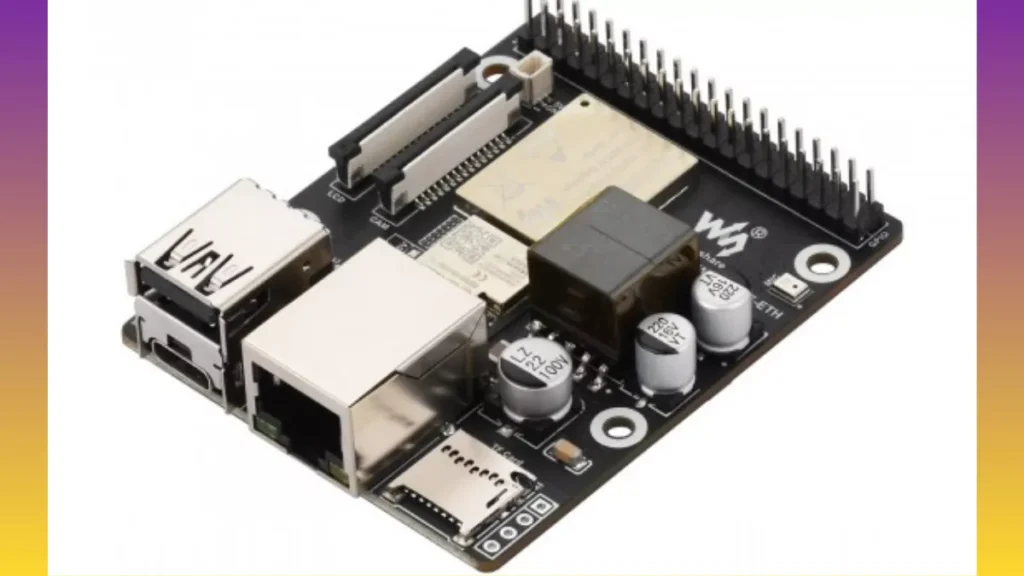
Recently, Waveshare introduced a development board that brings all these advantages together: the Waveshare ESP32‑P4 + ESP32‑C6 PoE development board. (IPv6.net)
Here’s what makes it cool:
- It supports 100 Mbps Ethernet with PoE, so you don’t have to worry about separate power lines. (IPv6.net)
- It includes Wi‑Fi 6 (thanks to ESP32‑C6), Bluetooth LE, and even OTG via USB 2.0. (IPv6.net)
- Peripherals are generous: there’s MIPI‑CSI and MIPI‑DSI for camera / display, audio codec + amp + mic, MicroSD slot, and a 40‑pin GPIO header. (IPv6.net)
- Useful interfaces like I2S, I2C, SPI, UART, PWM/MCPWM, RMT, ADC, and TWAI (CAN). (IPv6.net)
- For security, it supports secure boot, flash encryption, crypto accelerators, TRNG, and privilege separation. (IPv6.net)
Altogether, this board is tailor-made for HMI terminals, smart panels, multimedia control, and local edge‑AI or IoT gateways. It really bridges wired reliability with wireless flexibility.
How It Helps in HMI and IoT Applications
Let me put this into a scenario: imagine you’re building a smart panel for a factory or a home-automation dashboard.
- You want reliable connectivity: PoE gives you a steady power and an ethernet link.
- You want wireless flexibility: with Wi‑Fi 6 and Bluetooth LE, the panel can talk to other devices, sensors, or even mobile apps.
- You might want to embed a display: the MIPI‑DSI interface helps you hook up a screen cleanly.
- For touch input or external sensors, the 40 GPIOs let you connect keypads, buttons, or sensors easily.
- For audio-based interactions (voice, notifications), the audio codec + mic support is really handy.
In short, it’s not just another microcontroller board — it’s a full-fledged HMI / IoT development platform.
For a smooth setup of Wi-Fi connections on boards like this, using tools such as ESP32 WiFiManager tutorials can simplify network management, letting your device automatically connect to available networks without hardcoding credentials.
How It Compares to Other ESP32‑PoE Boards
There are several PoE boards in the ESP32 space, and each has its niche. Here’s how the ESP32‑C6 PoE solution compares:
- Traditional ESP32-PoE or boards like esp32-poe-ea, esp32-poe-iso, esp32-poe-iso-ea: these often use older ESP32 variants (like the original Xtensa-based cores), not RISC‑V or Wi‑Fi 6.
- ESP32-poe board: good for general Ethernet + PoE, but lacks the modern radio stack (Thread / Zigbee) that C6 supports.
- ESP32 poe ethernet hats or esp32 poe hat: add-ons or “hats” for PoE, but may not integrate as tightly or offer the advanced connectivity features that ESP32‑C6 brings.
- ESP32-C3 PoE: the C3 is also RISC‑V, but typically doesn’t have Wi-Fi 6 and 802.15.4 radio like the C6.
So, if your priority is multi-protocol connectivity + Ethernet + PoE, the ESP32‑C6 board is especially compelling.
Advanced Connectivity: Zigbee, Thread, and More
One standout feature of the ESP32‑C6 (and thus any development board built on it) is its support for 802.15.4 — which means Zigbee and Thread protocols. (Espressif Systems)
Why does that matter? In IoT:
- You might want to build a Zigbee Matter bridge: C6 can act as a Matter endpoint and talk to other Zigbee Matter devices.
- For Thread networks, C6 supports Thread and can be used in Thread-based home automation.
- Because it also has Wi-Fi and BLE, you get incredible protocol flexibility in a single chip.
If your product roadmap involves smart home devices, mesh networks, or interoperable devices, this becomes a very powerful building block.
Alternative “PoE + C6” Style Boards: Bug Board & Shield
Speaking of alternative boards, there is the Esp32‑C6‑Bug board: a development board built around the C6 SoC with Wi-Fi 6, BLE, and 802.15.4. (Crowd Supply)
However, the Bug board itself doesn’t have built-in Ethernet or PoE — that’s handled by a companion Esp32-Bug-Eth shield, which adds a W5500 Ethernet chip plus a DP1435-5V PoE module. (Crowd Supply)
This modular approach is interesting if you want to prototype first and then decide whether to integrate PoE. The shield also supports Stemma-QT connectors, making it easy to interface with sensors. (Crowd Supply)
You can even pick up just the Esp32-Bug‑PoE shield separately. (e-shop.prokyber.com)
Real‑World Use & Community Feedback
From the community:
- Some users say that when using the Bug board + Ethernet shield, they can offload wireless traffic (like Thread or Zigbee) to Ethernet, giving more stable multi-protocol setups. (Reddit)
- Others have tried using the C6 with PlatformIO, but noted that Arduino support is limited — PlatformIO often insists on ESP‑IDF framework instead. (Reddit)
- There are also some notes about USB limitations: for instance, on some C6 boards, the USB port is only for serial communication and doesn’t act like a general USB device. (Reddit)
All this shows it’s still a fairly cutting-edge ecosystem — but growing fast.
Other ESP32 Variants to Consider (and Why C6 Is Unique)
It’s useful to compare with other variants:
- ESP32‑C3 PoE: A more budget-friendly RISC‑V chip, but doesn’t bring Wi-Fi 6 or 802.15.4.
- ESP32 Cam PoE: If your project demands a camera + PoE, this is an option — but it’s usually based on older ESP32 cores, and may not give the same radio flexibility.
- ESP32‑POE and esp32-poe-iso boards: solid for Ethernet + PoE, but not as future-ready when you think mesh networks or Matter.
- Waveshare ESP32‑P4 + boards (like the one mentioned): note that the Waveshare ESP32‑P4 + ESP32-C6 PoE board is a hybrid: P4 core (AI instructions) + C6 for connectivity. (IPv6.net)
Real Hardware Examples You Can Buy
Here are a few relevant boards that are currently available:
- Espressif ESP32‑C6‑DevKitC‑1: The official development board from Espressif, with Wi-Fi 6, C6 core, and exposed GPIO.
- ESP32‑C6 DevKitM‑1: A more compact version, ideal for breadboarding or smaller prototypes.
- Waveshare ESP32‑C6 1.47″ Display Board: This board even comes with a 1.47″ color screen, which is great for basic HMI – though note, this version doesn’t necessarily support PoE out of the box.
I couldn’t find a commercial, off‑the‑shelf ESP32‑C6 PoE board other than the Waveshare‑style hybrid or the Bug + shield combo — but those are robust starting points.
Pricing & Cost Considerations (ESP32‑C6 Price)
When it comes to ESP32-C6 price, it’s still somewhat niche — newer boards or development kits will likely cost more compared to older ESP32 variants. The Bug board + shield combo (for PoE) is reasonably priced for prototyping. (Crowd Supply)
Meanwhile, basic C6 dev kits like the WeAct version sell for around US$ 6–8 for the board itself. (CNX Software – Embedded Systems News)
But when you add features like PoE, a display, or audio, the cost goes up — so when planning a project, budget accordingly.
Getting Started: How to Use the Board for HMI / IoT
If you’ve just got one in your hands, here’s a friendly roadmap to get started:
- Read the Datasheet: Start with the ESP32‑C6 datasheet. (Espressif Systems)
- Set Up Your Development Environment: Use ESP-IDF, which fully supports C6. (Espressif Systems)
- Power It Right: For PoE, make sure your switch or injector is compatible. (Using a PoE switch or PoE injector helps you test the ethernet + power features.)
- Prototype Peripherals: Connect a display via MIPI‑DSI if you’re building an HMI, or hook up microSD, microphone, or other I/O.
- Use Network Features: Try both Wi-Fi 6 and Ethernet. Test Zigbee or Thread if you want mesh networking.
- Secure Your Device: Turn on secure boot, enable flash encryption, and take advantage of crypto accelerators.
- Deploy & Test: Build a simple UI, deploy your panel, and monitor power consumption, latency, and connectivity.
Limitations & Things to Watch Out For
Just to keep things real — as promising as the ESP32‑C6 PoE development board is, it has some trade‑offs:
- Radio co‑existence: Some users note that using Wi-Fi and 802.15.4 (Zigbee / Thread) at the same time is limited due to RF path sharing. (Reddit)
- USB limitations: On certain C6 boards, USB is only for serial, not general USB device functionality. (Reddit)
- Support maturity: While ESP-IDF supports C6, some frameworks (like Arduino or PlatformIO) may not have as mature or stable support. (Reddit)
- PoE height and size: Adding PoE modules or shields can increase board size or complexity, especially on a compact dev board.
- Cost trade‑offs: If you don’t need PoE or Zigbee / Thread, older ESP32 boards might be cheaper and more than good enough.
Why This Board Could Rank #1 for Your Next Project
If you ask me (over coffee), here’s why the ESP32‑C6 PoE development board (especially a Waveshare-style hybrid) might be the best choice for your next IoT or HMI build:
- Versatility: Wired + wireless connectivity — you’re covered for robustness or flexibility.
- Long-term scalability: Support for Zigbee, Thread, and Matter means your design is future-ready.
- Security: Secure boot, encryption, cryptographic accelerators — things that matter if you’re building a real product.
- Simplicity of deployment: PoE means fewer cables, fewer power hassles, especially for remote panels.
- Performance: RISC-V + Wi-Fi 6 + multi-protocol = modern, high-performance platform.
If you’re building a smart device with a real display or need a stable network connection, this board punches way above its weight.
Final Thoughts
To wrap up, the ESP32‑C6 PoE development board targeting HMI and IoT applications is a pretty compelling piece of hardware. It’s not just about having “another ESP32” — it’s about combining up-to-date wireless tech (Wi-Fi 6 + BLE + Zigbee) with wired ethernet + PoE, making it a strong candidate for smart panels, gateways, and edge devices.
Yes, there are alternatives (like the Bug board + shield, or older PoE boards), but for future-ready multi-protocol designs, C6 is a sweet spot. Just be aware of tradeoffs, set up your development environment with ESP-IDF, and you’ll be well on your way.
Leave a Reply