Role of a Tick Interrupt in an RTOS : Learn the role of a tick interrupt in RTOS and how it manages time and task scheduling in real-time systems. Beginner-friendly guide with examples from IoT, robotics, automotive, and medical applications.
Real-Time Operating Systems (RTOS) are widely used in embedded systems to handle tasks that must run within strict timing constraints. One of the most important concepts in an RTOS is the tick interrupt, which plays a key role in time management and task scheduling.
In this article, we will explain what a tick interrupt is, why it is important, and provide examples of real-world applications where it is used.
Role of a Tick Interrupt in an RTOS
What is a Tick Interrupt in RTOS?
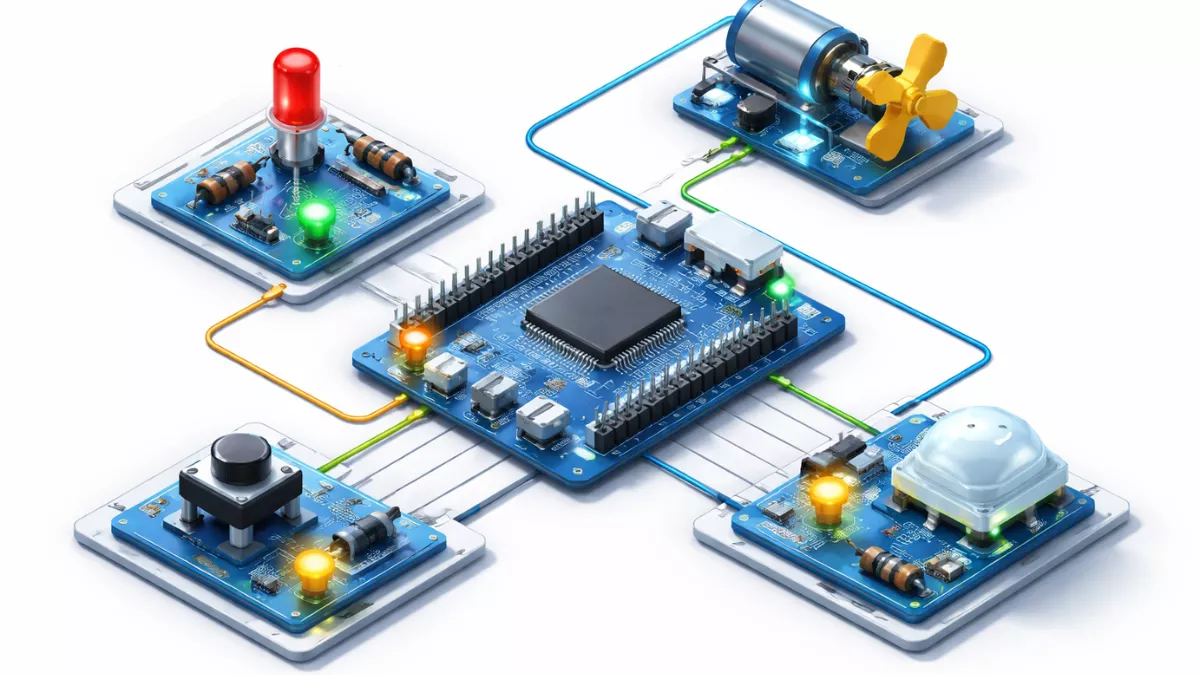
A tick interrupt is a periodic signal generated by a hardware timer in a microcontroller or processor.
- It occurs at a fixed interval (for example, every 1 millisecond).
- Each tick updates the system clock inside the RTOS.
- The RTOS uses these ticks to manage delays, timeouts, and scheduling decisions.
Think of it like the heartbeat of the RTOS—without it, the system would not know how to measure time or decide when to switch tasks.
Role of Tick Interrupt in RTOS
1. Time Management
The tick interrupt allows the RTOS to measure time in small intervals.
- Functions like
delay(1000 ms)or timeouts in message queues rely on ticks. - The RTOS keeps a counter that increases on every tick, helping tasks know how much time has passed.
Example Applications:
- Digital Watches: Updating the time every second using periodic ticks.
- IoT Sensors: Collecting temperature data every 500 ms.
- Industrial Automation: Sending sensor status updates at fixed intervals.
2. Task Scheduling
In an RTOS, tasks have priorities and sometimes need to run periodically. The tick interrupt helps the scheduler decide:
- When to switch tasks (context switching).
- When to wake up tasks that were waiting for a timer or delay.
- How to ensure fair CPU usage among multiple tasks.
Example Applications:
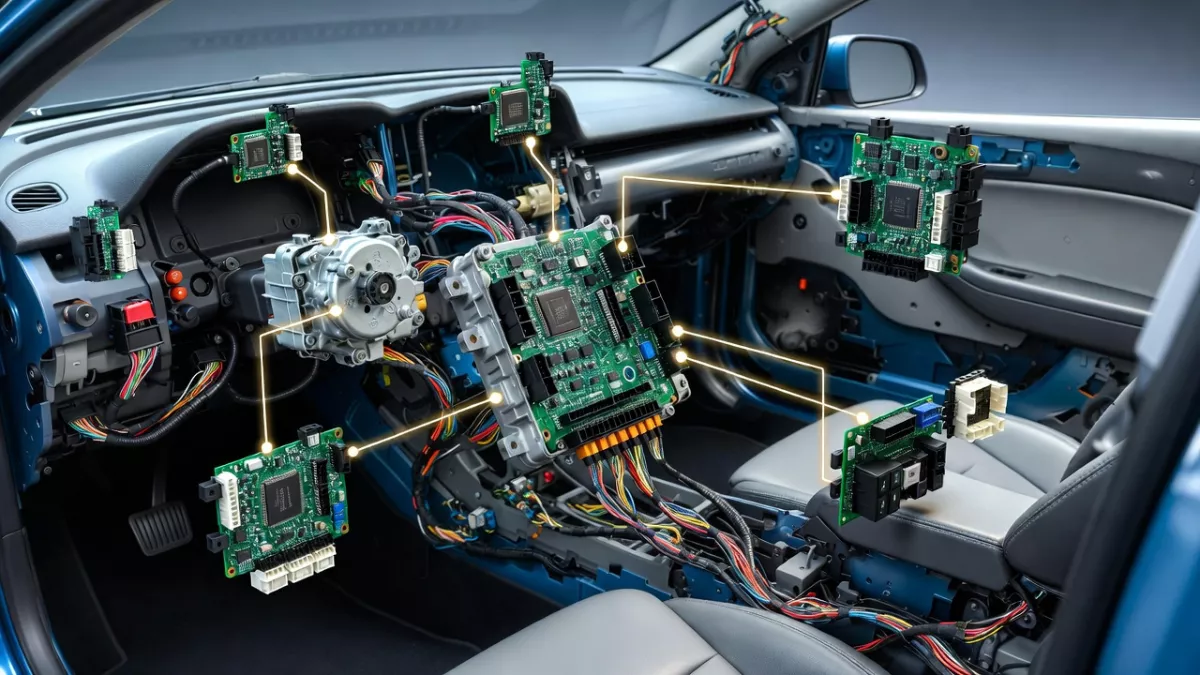
- Automotive Systems: Airbag control tasks must run immediately when triggered, while background monitoring tasks run periodically.
- Robotics: Motor control tasks execute every 10 ms, while navigation tasks run every 100 ms.
- Medical Devices: A pacemaker uses tick interrupts to generate precise timing for electrical pulses.
How Tick Interrupt Works (Step-by-Step)
- Hardware Timer Setup – A hardware timer in the microcontroller is configured to generate interrupts at fixed intervals.
- Tick ISR (Interrupt Service Routine) – When the timer fires, the RTOS runs the tick handler function.
- Update System Time – The tick count (system clock) is updated.
- Check Delayed Tasks – The RTOS checks if any tasks’ wait/delay time has expired.
- Task Switching – If a higher-priority task is ready, the scheduler performs a context switch.
Key Benefits of Tick Interrupt in RTOS
- Precise time tracking in milliseconds or microseconds.
- Efficient multitasking with minimal CPU overhead.
- Support for real-time deadlines and predictable task execution.
- Flexibility to handle periodic and aperiodic tasks.
Conclusion of Role of a Tick Interrupt in an RTOS
The tick interrupt in an RTOS is the foundation of time management and task scheduling. It acts like the system’s heartbeat, ensuring that delays, timeouts, and periodic tasks are handled accurately.
Without the tick interrupt, an RTOS would lose its ability to manage time-critical tasks, making it unsuitable for real-time applications such as automotive safety systems, robotics, and medical devices.
Understanding the tick interrupt is essential for anyone learning RTOS concepts or working on embedded systems.
FAQ Role of a Tick Interrupt in an RTOS
Q1. What is a tick in RTOS?
A tick is a fixed time interval generated by a hardware timer that helps the RTOS manage time and schedule tasks.
Q2. What happens if an RTOS has no tick interrupt?
Without ticks, the RTOS cannot track time or schedule periodic tasks, making real-time operation impossible.
Q3. Can tick interrupts be customized?
Yes, developers can configure the tick frequency (e.g., 1 ms or 10 ms) based on the application’s needs.
Q4. What is the difference between tick-based and tickless RTOS?
- Tick-based RTOS uses periodic ticks for scheduling.
- Tickless RTOS saves power by waking up only when needed, common in low-power IoT systems.
You can also Visit other tutorials of Embedded Prep
- Multithreading in C++
- Multithreading Interview Questions
- Multithreading in Operating System
- Multithreading in Java
- POSIX Threads pthread Beginner’s Guide in C/C++
- Speed Up Code using Multithreading
- Limitations of Multithreading
- Common Issues in Multithreading
- Multithreading Program with One Thread for Addition and One for Multiplication
- Advantage of Multithreading
- Disadvantages of Multithreading
- Applications of Multithreading: How Multithreading Makes Modern Software Faster and Smarter”
- Master CAN Bus Interview Questions 2025
- What Does CAN Stand For in CAN Bus?
- CAN Bus Message Filtering Explained
- CAN Bus Communication Between Nodes With Different Bit Rates
- How Does CAN Bus Handle Message Collisions
- Message Priority Using Identifiers in CAN Protocol


Mr. Raj Kumar is a highly experienced Technical Content Engineer with 7 years of dedicated expertise in the intricate field of embedded systems. At Embedded Prep, Raj is at the forefront of creating and curating high-quality technical content designed to educate and empower aspiring and seasoned professionals in the embedded domain.
Throughout his career, Raj has honed a unique skill set that bridges the gap between deep technical understanding and effective communication. His work encompasses a wide range of educational materials, including in-depth tutorials, practical guides, course modules, and insightful articles focused on embedded hardware and software solutions. He possesses a strong grasp of embedded architectures, microcontrollers, real-time operating systems (RTOS), firmware development, and various communication protocols relevant to the embedded industry.
Raj is adept at collaborating closely with subject matter experts, engineers, and instructional designers to ensure the accuracy, completeness, and pedagogical effectiveness of the content. His meticulous attention to detail and commitment to clarity are instrumental in transforming complex embedded concepts into easily digestible and engaging learning experiences. At Embedded Prep, he plays a crucial role in building a robust knowledge base that helps learners master the complexities of embedded technologies.