Learn about the Network Driver Model in Linux, its architecture, components, and how it enables communication between the kernel and network hardware. Perfect for beginners and embedded developers.
Introduction
If you’re diving into Linux kernel development or embedded systems, understanding the Network Driver Model in Linux is essential. Networking is the backbone of modern computing, whether for cloud services, IoT devices, or everyday web traffic. At the core of Linux networking is the network driver, which acts as a bridge between hardware and the Linux kernel’s network stack.
Think of it like this: your computer’s network card can send and receive packets, but it doesn’t inherently know how to talk to Linux. That’s where the Linux network driver steps in it translates between the hardware and the software, ensuring smooth communication.
In this guide, we’ll explore the network driver model in Linux, its architecture, types, and how to implement and test a network driver. By the end, you’ll have a solid understanding of how Linux handles network devices, and even some insight into driver programming.
1. Understanding the Network Driver Model
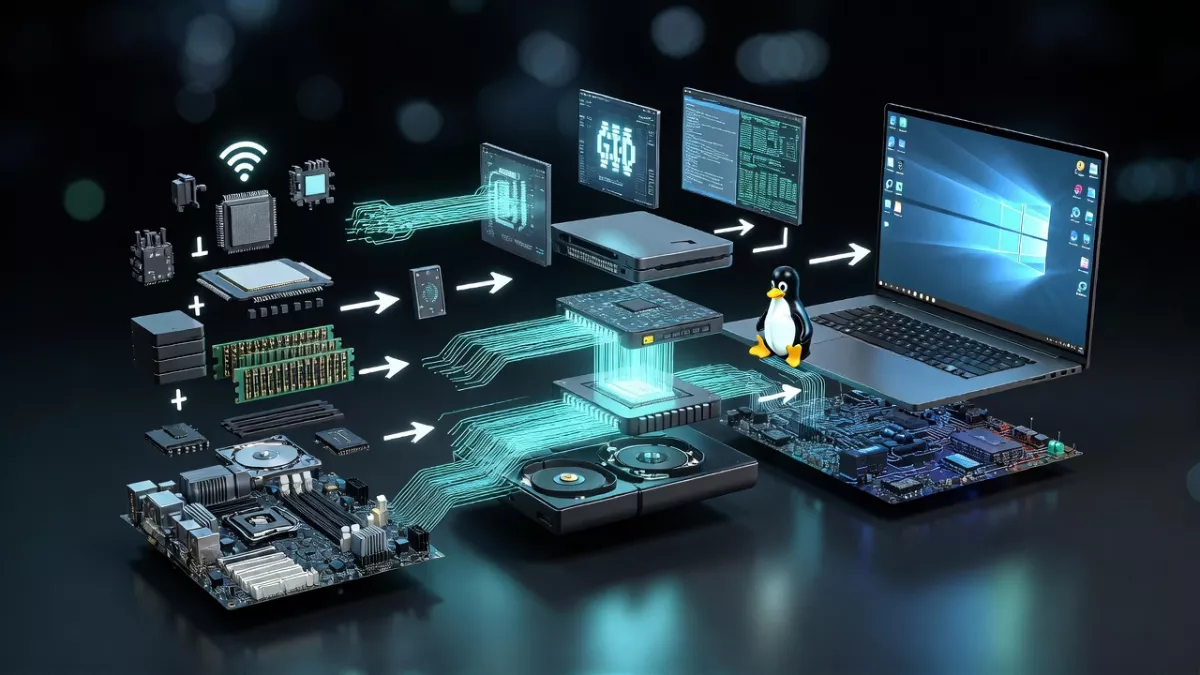
The Network Driver Model in Linux is a framework that defines how network devices interact with the kernel. It provides a standardized way for the kernel to communicate with hardware such as network interface cards (NICs), Ethernet controllers, or Wi-Fi modules.
At a high level, a network driver in Linux has to handle:
- Initialization of the network device
- Sending and receiving data packets
- Handling interrupts and errors
- Power management and device shutdown
Linux uses a modular design, which means that network drivers can be loaded and unloaded dynamically using kernel modules. This makes it easier for developers to update drivers or add support for new hardware without recompiling the entire kernel.
2. Linux Network Driver Architecture
The architecture of the Linux network driver model consists of multiple layers:
- User Space:
Applications like browsers, servers, or IoT software interact with the network through system calls, such assend(),recv(), andioctl(). - Network Stack:
The Linux kernel provides a robust network stack that handles protocols like TCP, UDP, IP, and Ethernet. It ensures reliable data transfer, packet routing, and error checking. - Network Device Layer:
This is where Linux network drivers come into play. The driver communicates with the hardware and converts the kernel’s network requests into device-specific commands. - Hardware Layer:
This includes the actual NIC or network controller. The hardware sends and receives electrical signals over cables or wireless mediums.
The key takeaway is that the Linux network driver acts as a translator between the kernel’s generic network interface and the specific capabilities of the hardware.
3. Types of Network Drivers in Linux
Linux supports several types of network drivers, each designed for different hardware and use cases:
- Ethernet Drivers:
These drivers manage wired connections and are often used in servers, desktops, and industrial devices. Keywords: Linux Ethernet driver, Linux NIC driver. - Wireless Drivers:
These handle Wi-Fi or other wireless interfaces. They often include support for encryption, scanning, and connection management. - Virtual Network Drivers:
These drivers create virtual interfaces, such aslo(loopback) ortun/tapfor VPNs and virtualization. - Specialized NIC Drivers:
Some NICs have offload capabilities, like TCP offloading or hardware-based packet filtering. Drivers for these devices need to handle these advanced features.
4. Network Driver Interfaces
In Linux, network drivers interact with the kernel using standard interfaces:
net_deviceStructure:
Each network device is represented by astruct net_device. It contains all the metadata and function pointers needed by the driver.- Network Device Operations:
Drivers implement a set of operations, such as:ndo_open: Initialize the devicendo_stop: Stop the devicendo_start_xmit: Transmit a packetndo_set_config: Configure device parameters
- Interrupt Handling:
Network drivers handle hardware interrupts for packet reception or transmission completion. - NAPI (New API):
For high-performance networking, Linux uses NAPI to reduce CPU usage during heavy traffic. Drivers that support NAPI can efficiently process multiple packets in a single interrupt.
5. How Linux Network Drivers Work
Here’s a step-by-step breakdown of how a Linux network driver handles data:
- Initialization:
The driver registers the network device with the kernel usingregister_netdev(). - Packet Transmission:
When an application sends data, the kernel passes the packet to the driver viando_start_xmit(). The driver converts it to hardware-specific format and sends it over the network. - Packet Reception:
Incoming packets trigger an interrupt. The driver reads the packet from the device buffer, wraps it in ask_buff(socket buffer), and passes it up to the kernel network stack. - Error Handling:
If the hardware encounters errors, the driver updates statistics and notifies the kernel to handle retransmission or error logging.
6. Writing a Simple Linux Network Driver
Creating a Linux NIC driver from scratch involves:
- Including Required Headers:
#include <linux/module.h>
#include <linux/kernel.h>
#include <linux/netdevice.h>
#include <linux/etherdevice.h>
- Defining Network Device Operations:
static int my_open(struct net_device *dev) {
    printk(KERN_INFO "Network device opened\n");
    netif_start_queue(dev);
    return 0;
}

static int my_stop(struct net_device *dev) {
    printk(KERN_INFO "Network device stopped\n");
    netif_stop_queue(dev);
    return 0;
}

static netdev_tx_t my_start_xmit(struct sk_buff *skb, struct net_device *dev) {
    printk(KERN_INFO "Packet transmitted\n");
    dev_kfree_skb(skb);
    return NETDEV_TX_OK;
}
- Registering the Device:
static const struct net_device_ops my_netdev_ops = {
    .ndo_open = my_open,
    .ndo_stop = my_stop,
    .ndo_start_xmit = my_start_xmit,
};

static void my_setup(struct net_device *dev) {
    ether_setup(dev);
    dev->netdev_ops = &my_netdev_ops;
}

static int __init my_init(void) {
    struct net_device *dev;
    dev = alloc_netdev(0, "myeth%d", NET_NAME_UNKNOWN, my_setup);
    register_netdev(dev);
    printk(KERN_INFO "Network driver loaded\n");
    return 0;
}

static void __exit my_exit(void) {
    unregister_netdev(dev);
    free_netdev(dev);
    printk(KERN_INFO "Network driver unloaded\n");
}

module_init(my_init);
module_exit(my_exit);
MODULE_LICENSE("GPL");
This is a barebones Linux network driver. It can be loaded using insmod and unloaded using rmmod. While it doesn’t interact with real hardware, it’s a starting point to understand driver registration and packet handling.
7. Testing Linux Network Drivers
Testing a network driver involves:
- Loading the Module:
sudo insmod my_net_driver.ko
- Checking Device Registration:
ifconfig -a
- Sending Test Packets:
ping -I myeth0 127.0.0.1
- Checking Kernel Logs:
dmesg | tail
- Unloading the Module:
sudo rmmod my_net_driver
Testing ensures your driver correctly registers the device, handles packets, and cleans up resources on exit.
8. Advanced Features in Linux Network Drivers
- Multiqueue Support:
Modern NICs can have multiple transmit and receive queues. Linux drivers can utilize multiqueue to improve throughput. - Offloading:
Drivers can offload tasks like checksum computation, segmentation, or VLAN tagging to hardware. - Power Management:
Network drivers support suspend/resume operations for laptops and mobile devices. - Debugging and Logging:
Linux provides tools likeethtoolandtcpdumpto debug network drivers.
9. Common Interview Questions on Linux Network Drivers
Round 1 Questions:
- What is a network driver in Linux?
A driver that enables the kernel to communicate with network hardware. - Explain
net_devicestructure.
It represents each network interface in Linux and contains pointers to driver operations. - What is NAPI?
NAPI is a mechanism to improve performance by reducing interrupts during heavy traffic.
Round 2 Questions:
- How does Linux handle packet transmission?
Application → kernel network stack → network driver → hardware. - Difference between Ethernet and virtual network drivers?
Ethernet drivers manage physical NICs; virtual drivers manage virtual interfaces likeloortun/tap. - How to debug a Linux network driver?
Usingdmesg,ethtool,tcpdump, or kernel printk logs. - How do interrupts work in network drivers?
Hardware signals the CPU when a packet is received or transmitted, and the driver handles it.
Complete Step-by-Step Guide: Linux Wi-Fi Driver from Scratch to Flash and Test
Step 1: Understand Linux Wireless Architecture
Before writing a Wi-Fi driver, you need to understand Linux’s wireless framework:
- cfg80211: Kernel interface for wireless configuration (scan, connect, regulatory compliance).
- mac80211: Provides MAC layer functions for Wi-Fi. Most modern Linux drivers use mac80211 for soft-MAC.
- Wi-Fi NIC Driver: Hardware-specific code that interacts with the chipset and mac80211.
Flow:
User Apps (ping, browser)
      ↓
Linux Network Stack (TCP/IP)
      ↓
mac80211 (Soft MAC framework)
      ↓
Wi-Fi NIC Driver (Hardware-specific)
      ↓
Wi-Fi Chip (TX/RX over air)
Step 2: Set Up Development Environment
- Linux system with kernel headers:
sudo apt update
sudo apt install build-essential linux-headers-$(uname -r) git
- Embedded board (Raspberry Pi, BeagleBone Black) or virtual Wi-Fi (
mac80211_hwsim) for testing. - Tools for testing:
sudo apt install iw wireless-tools ethtool tcpdump
- Create project directory:
mkdir ~/wifi_driver_project && cd ~/wifi_driver_project
Step 3: Create Project Structure
wifi_driver_project/
├── wifi_driver.c
└── Makefile
wifi_driver.c→ main driverMakefile→ build instructions
Step 4: Skeleton Wi-Fi Driver (wifi_driver.c)
Create a simple network driver:
#include <linux/module.h>
#include <linux/kernel.h>
#include <linux/init.h>
#include <linux/netdevice.h>
#include <linux/etherdevice.h>

MODULE_LICENSE("GPL");
MODULE_AUTHOR("Your Name");
MODULE_DESCRIPTION("Skeleton Wi-Fi Driver");

static int wifi_open(struct net_device *dev) {
    netif_start_queue(dev);
    printk(KERN_INFO "Wi-Fi device opened\n");
    return 0;
}

static int wifi_stop(struct net_device *dev) {
    netif_stop_queue(dev);
    printk(KERN_INFO "Wi-Fi device stopped\n");
    return 0;
}

static netdev_tx_t wifi_xmit(struct sk_buff *skb, struct net_device *dev) {
    printk(KERN_INFO "Wi-Fi packet transmitted (len=%u)\n", skb->len);
    dev_kfree_skb(skb);
    return NETDEV_TX_OK;
}

static const struct net_device_ops wifi_netdev_ops = {
    .ndo_open = wifi_open,
    .ndo_stop = wifi_stop,
    .ndo_start_xmit = wifi_xmit,
};

static void wifi_setup(struct net_device *dev) {
    ether_setup(dev);
    dev->netdev_ops = &wifi_netdev_ops;
}

static struct net_device *wifi_dev;

static int __init wifi_init(void) {
    wifi_dev = alloc_netdev(0, "wifi%d", NET_NAME_UNKNOWN, wifi_setup);
    if (!wifi_dev) return -ENOMEM;
    if (register_netdev(wifi_dev)) {
        free_netdev(wifi_dev);
        return -ENODEV;
    }
    printk(KERN_INFO "Wi-Fi driver loaded\n");
    return 0;
}

static void __exit wifi_exit(void) {
    unregister_netdev(wifi_dev);
    free_netdev(wifi_dev);
    printk(KERN_INFO "Wi-Fi driver unloaded\n");
}

module_init(wifi_init);
module_exit(wifi_exit);
At this point, the driver registers a Wi-Fi interface (wifi0) and logs events.
Step 5: Makefile
obj-m += wifi_driver.o

all:
	make -C /lib/modules/$(shell uname -r)/build M=$(PWD) modules

clean:
	make -C /lib/modules/$(shell uname -r)/build M=$(PWD) clean
Step 6: Compile the Driver
make
Output: wifi_driver.ko
Step 7: Load and Test Skeleton Driver
- Load module:
sudo insmod wifi_driver.ko
- Check logs:
dmesg | tail
- Verify interface:
ifconfig -a
- Bring interface up:
sudo ifconfig wifi0 up
- Test packet transmission:
ping -I wifi0 127.0.0.1
- Unload driver:
sudo rmmod wifi_driver
Step 8: Integrate mac80211 Framework
- Include mac80211 headers:
#include <net/mac80211.h>
#include <linux/ieee80211.h>
- Add hardware structure:
struct ieee80211_hw *hw;
- Implement required callbacks:
static void wifi_tx(struct ieee80211_hw *hw, struct sk_buff *skb) {
    printk(KERN_INFO "mac80211 tx packet\n");
    ieee80211_tx_status_irqsafe(hw, skb);
}

static int wifi_start(struct ieee80211_hw *hw) {
    printk(KERN_INFO "mac80211 start\n");
    return 0;
}

static void wifi_stop_mac80211(struct ieee80211_hw *hw) {
    printk(KERN_INFO "mac80211 stop\n");
}

static struct ieee80211_ops wifi_ops = {
    .tx = wifi_tx,
    .start = wifi_start,
    .stop = wifi_stop_mac80211,
};
- Allocate and register hardware:
hw = ieee80211_alloc_hw(sizeof(struct wifi_priv), &wifi_ops);
if (!hw) return -ENOMEM;
ieee80211_register_hw(hw);
Step 9: Scanning and Connecting
- Use cfg80211 for scanning:
cfg80211_scan_done(scan_request, true);
- Or test scanning via CLI:
sudo iwlist wifi0 scan
- Connect to Wi-Fi:
sudo iwconfig wifi0 essid "YourSSID" key s:YourPassword
sudo dhclient wifi0
Step 10: Flashing on Embedded Board
- Copy driver:
scp wifi_driver.ko user@board:/tmp
- Load module:
sudo insmod /tmp/wifi_driver.ko
- Bring up interface:
sudo ifconfig wifi0 up
- Connect to Wi-Fi and get IP:
sudo iwconfig wifi0 essid "YourSSID" key s:YourPassword
sudo dhclient wifi0
- Test network:
ping 8.8.8.8
Step 11: Debugging Tools
- Kernel logs:
dmesg -w - Interface info:
iwconfig,ifconfig - Packet capture:
tcpdump -i wifi0 - Check NIC:
ethtool -i wifi0
Step 12: Advanced Features to Implement Later
- Encryption support: WPA2/WPA3
- Power management callbacks: suspend/resume
- Firmware loading: for Realtek/Intel NICs
- Multiqueue TX/RX: for high throughput NICs
- Debug logging: verbose printk or dynamic debug
Step 13: Interview Questions
Round 1:
- What is a Wi-Fi driver in Linux?
- Difference between soft MAC and hard MAC drivers.
- What is mac80211 and cfg80211?
Round 2:
- Explain packet transmission flow in Wi-Fi driver.
- How do you handle interrupts in Wi-Fi NIC?
- How to debug Wi-Fi drivers in Linux?
- How to implement Wi-Fi scanning using Linux driver?
- Explain NAPI usage in wireless drivers.
Step 14: Testing Checklist
- Load driver
- Check
wifi0interface - Ping loopback / external IP
- Scan available networks
- Connect to Wi-Fi
- Monitor kernel logs for TX/RX
- Unload driver cleanly
FAQs About Network Driver Model in Linux
1. What is the primary role of a Linux network driver?
The Linux network driver acts as a bridge between the kernel and the physical or virtual network hardware. It ensures smooth communication, packet transmission, and reception between your system and the network.
2. Can I write a network driver without kernel knowledge?
Basic experimentation with virtual network devices is possible, but a solid understanding of the Linux kernel is recommended for integrating with real hardware and handling low-level networking operations.
3. What is skb in network drivers?skb stands for socket buffer, a critical data structure used to store and manage network packets in the Linux kernel. Every packet transmitted or received passes through skb.
4. What are virtual network drivers?
Virtual network drivers simulate network interfaces in software. They are commonly used for testing, virtualization, VPNs, or creating loopback interfaces without actual hardware.
5. How do I test a Linux network driver?
Testing involves loading the kernel module, verifying device registration, sending and receiving test packets, and monitoring kernel logs with tools like dmesg to ensure proper driver functionality.
6. What is the difference between open-source and proprietary network drivers?
Open-source drivers are freely available for modification, distribution, and community support. Proprietary drivers are closed-source and controlled by the hardware vendor, limiting modification or redistribution.
7. Why is NAPI important in network drivers?
NAPI (New API) improves network performance by reducing CPU interrupts during high traffic. It switches between interrupt-driven and polling modes to handle incoming packets efficiently.
8. Can network drivers support wireless interfaces?
Yes, Linux supports drivers for wireless interfaces such as Wi-Fi, Bluetooth, and other protocols. Wireless drivers often use frameworks like mac80211 and cfg80211 to manage connectivity.
9. How do I add a new network device dynamically in Linux?
You can create a new network device dynamically in your driver using alloc_netdev() to allocate the device structure and register_netdev() to register it with the kernel.
10. What tools help debug Linux network drivers?
Common tools include:
- dmesg: Monitor kernel logs.
- ethtool: Check device capabilities and status.
- tcpdump / Wireshark: Capture and analyze network packets.
- printk: Log debug messages directly from the driver code.
Conclusion
The Network Driver Model in Linux is a crucial concept for anyone working with Linux kernel development or embedded systems. It provides a flexible framework to integrate and manage network hardware efficiently.
From understanding the architecture to writing your first simple driver and testing it, this guide covers everything a beginner needs to get started.
By exploring Linux network drivers, you not only learn about hardware-software interaction but also gain insights into high-performance networking, advanced kernel features, and driver debugging.
Whether your goal is embedded Linux development, server optimization, or network engineering, mastering the Linux network driver model is a skill that will set you apart.
Read More about Process : What is is Process
Read More about System Call in Linux : What is System call
Read More about IPC : What is IPC


Mr. Raj Kumar is a highly experienced Technical Content Engineer with 7 years of dedicated expertise in the intricate field of embedded systems. At Embedded Prep, Raj is at the forefront of creating and curating high-quality technical content designed to educate and empower aspiring and seasoned professionals in the embedded domain.
Throughout his career, Raj has honed a unique skill set that bridges the gap between deep technical understanding and effective communication. His work encompasses a wide range of educational materials, including in-depth tutorials, practical guides, course modules, and insightful articles focused on embedded hardware and software solutions. He possesses a strong grasp of embedded architectures, microcontrollers, real-time operating systems (RTOS), firmware development, and various communication protocols relevant to the embedded industry.
Raj is adept at collaborating closely with subject matter experts, engineers, and instructional designers to ensure the accuracy, completeness, and pedagogical effectiveness of the content. His meticulous attention to detail and commitment to clarity are instrumental in transforming complex embedded concepts into easily digestible and engaging learning experiences. At Embedded Prep, he plays a crucial role in building a robust knowledge base that helps learners master the complexities of embedded technologies.