Beginner’s guide to Linux kernel process creation. Learn fork(), exec(), advantages, disadvantages, applications, and FAQs with simple examples.
If you’ve ever wondered “How does Linux actually create processes?”, you’re not alone. Process creation is one of the most fundamental tasks in any operating system, and in Linux, it’s handled in a very elegant way by the kernel. Don’t worry if this sounds complex—we’ll break it down step by step in a beginner-friendly manner.
What is a Process in Linux?
Think of a process as a running instance of a program. For example, when you open a terminal and run ls, Linux creates a process for that command. Each process has:
- Its own memory space
- A process ID (PID)
- A parent-child relationship with other processes
The Linux kernel is the brain that manages all these processes.
How Does Linux Kernel Create a Process?
Here’s the fun part: the Linux kernel doesn’t start processes from scratch every time. Instead, it uses two powerful system calls:
- fork()
- Creates a new process by duplicating the calling process.
- The child process is almost identical to the parent but gets a new PID.
- Example: if your shell is running, and you type
ls, the shell usesfork()to create a child process forls.
- exec()
- Replaces the child process’s memory with a new program.
- In our example, after
fork(), the child callsexec()to load thelsprogram into memory.
So, the formula is:
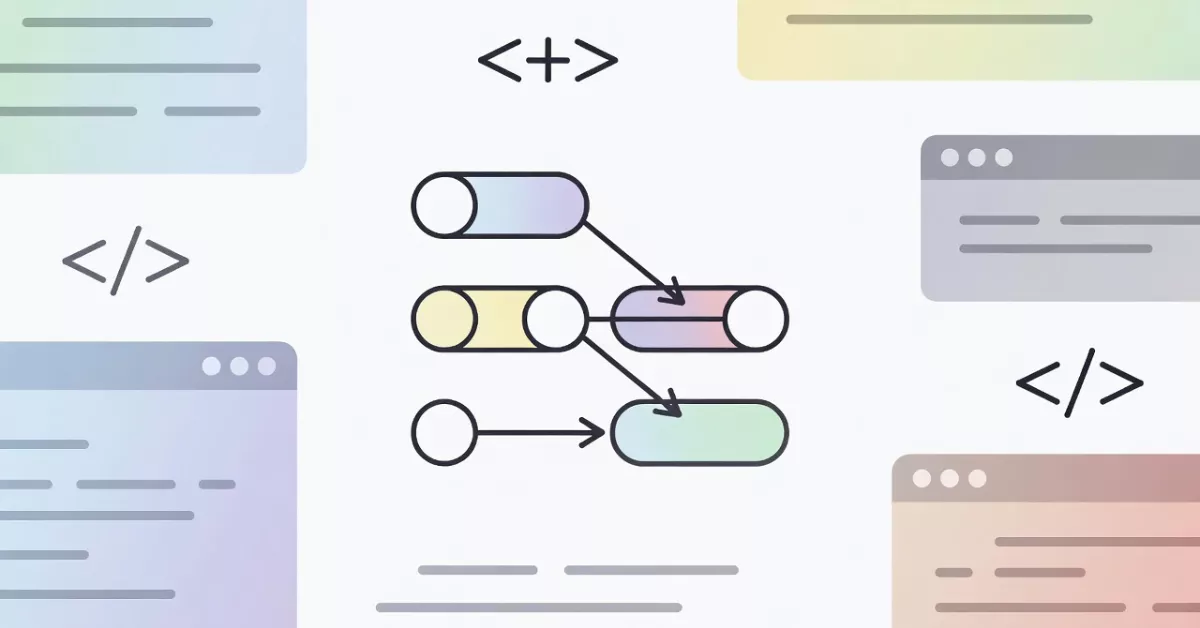
New process = fork() + exec()
A Simple Example in C
Here’s a beginner-friendly code snippet to show how Linux kernel process creation works:
#include <stdio.h>
#include <unistd.h>
#include <sys/types.h>

int main() {
    pid_t pid = fork();  // Create a new process

    if (pid == 0) {
        // This is the child process
        printf("Hello from the Child! PID = %d\n", getpid());
    } else {
        // This is the parent process
        printf("Hello from the Parent! PID = %d, Child PID = %d\n", getpid(), pid);
    }

    return 0;
}
When you run this program, you’ll see both parent and child messages, showing how Linux kernel creates separate processes.
Parent and Child Relationship
- Every process in Linux has a parent process (except the very first process called
init). - The child inherits many attributes from the parent, such as file descriptors.
- When a parent process dies, the child is adopted by the
initprocess.
This structure forms a process tree, which you can view using the pstree command in Linux.
Why is Linux Kernel Process Creation Important?
- Multitasking: Lets multiple applications run at the same time.
- Security: Each process has its own memory space, so they don’t interfere with each other.
- Scalability: The model allows servers to handle thousands of client requests efficiently.
Advantages of Linux Kernel Process Creation
- Efficient multitasking – Linux can run multiple processes simultaneously without major slowdowns.
- Security through isolation – Each process has its own memory space, preventing crashes or bugs in one process from breaking another.
- Flexibility – With
fork(),exec(), andclone(), developers can create processes or threads tailored to their needs. - Scalability – Servers can handle thousands of requests by creating lightweight processes.
- Stability – The parent-child hierarchy ensures proper process management and recovery (e.g.,
initadopts orphan processes).
Disadvantages of Linux Kernel Process Creation
- Overhead of process creation –
fork()duplicates process space, which can be heavy for large programs. - Context switching cost – Switching between many processes can reduce performance.
- Resource usage – Each process needs memory, file descriptors, and CPU time.
- Complexity for developers – Managing multiple processes, especially with IPC, can be tricky for beginners.
- Zombie processes – If a parent doesn’t clean up after a child process (via
wait()), zombies can accumulate.
Applications of Linux Kernel Process Creation
- Command execution in shells – Every time you run a command in Bash, the shell uses
fork()+exec(). - Web servers – Apache and Nginx use process creation (or threading) to handle client requests.
- Database servers – MySQL and PostgreSQL spawn processes or threads for handling queries.
- Background services (daemons) – System services like
cron,sshd, andsystemdare created and managed as processes. - Parallel computing – Scientific applications use multiple processes to perform computations faster.
Frequently Asked Questions (FAQ) on Linux Kernel Process Creation
Q1: What is Linux kernel process creation in simple words?
Linux kernel process creation is the way the operating system starts a new task (program). Instead of building everything from scratch, Linux makes a copy of an existing process using fork() and then loads a new program into it using exec().
Q2: What is the difference between a process and a program?
A program is just code stored on disk (like /bin/ls), but a process is a running instance of that program in memory, managed by the Linux kernel.
Q3: Which system calls are used in Linux kernel process creation?
The two main system calls are:
fork()– creates a new process by duplicating the current one.exec()– replaces the duplicated process’s memory with a new program.
Together, they handle most process creation in Linux.
Q4: What is the role of the parent and child process in Linux?
When a process creates a new one, the original is called the parent, and the new one is the child. The parent continues running while the child can either do the same work or execute another program.
Q5: How does the Linux kernel assign IDs to processes?
Every process gets a unique Process ID (PID). The parent knows the child’s PID, which is useful for managing or terminating it later.
Q6: What happens if a parent process ends before its child?
If a parent dies, the init process (PID 1) adopts the child. This prevents orphan processes from being lost in the system.
Q7: What is the difference between fork() and vfork()?
fork()creates a full copy of the parent process.vfork()is faster because it temporarily shares memory between parent and child until the child callsexec()or_exit().
Q8: What is clone() in Linux kernel process creation?
The Linux kernel also provides the clone() system call, which allows fine-grained control over what is shared between parent and child. It’s the basis for creating threads in Linux.
Q9: Can Linux kernel processes communicate with each other?
Yes ✅. Processes use Inter-Process Communication (IPC) methods such as:
- Pipes
- Message Queues
- Shared Memory
- Signals
Q10: Why is process creation important in Linux?
Process creation allows Linux to:
- Run multiple programs at once (multitasking)
- Keep programs isolated for security
- Efficiently use CPU and memory
Q11: How can I see process creation in action on my Linux system?
You can use commands like:
ps -ef→ shows all running processestoporhtop→ live process monitoringpstree→ visualize parent-child relationships
Q12: Is process creation the same in all operating systems?
No. Windows, macOS, and other OSs have different APIs. Linux’s approach using fork() + exec() is unique and very efficient.
Final Thoughts
Understanding Linux kernel process creation is like learning the ABCs of operating systems. With fork() and exec(), Linux can spin up processes quickly, efficiently, and securely.


Mr. Raj Kumar is a highly experienced Technical Content Engineer with 7 years of dedicated expertise in the intricate field of embedded systems. At Embedded Prep, Raj is at the forefront of creating and curating high-quality technical content designed to educate and empower aspiring and seasoned professionals in the embedded domain.
Throughout his career, Raj has honed a unique skill set that bridges the gap between deep technical understanding and effective communication. His work encompasses a wide range of educational materials, including in-depth tutorials, practical guides, course modules, and insightful articles focused on embedded hardware and software solutions. He possesses a strong grasp of embedded architectures, microcontrollers, real-time operating systems (RTOS), firmware development, and various communication protocols relevant to the embedded industry.
Raj is adept at collaborating closely with subject matter experts, engineers, and instructional designers to ensure the accuracy, completeness, and pedagogical effectiveness of the content. His meticulous attention to detail and commitment to clarity are instrumental in transforming complex embedded concepts into easily digestible and engaging learning experiences. At Embedded Prep, he plays a crucial role in building a robust knowledge base that helps learners master the complexities of embedded technologies.