Learn what context switching in a single-core CPU is, how it works, its advantages, disadvantages, real-time uses, C example code, and explained .
Okay, so you’ve got a single-core processor. Only one core means only one “worker” executing instructions at any given instant. But you still run lots of programs (or threads) that seem to run at once. That illusion comes from something called context switching in a single-core CPU.
In plain terms: when you switch from one task (process or thread) to another on a single core, the operating system pauses one task, saves its current state, then loads the state of another task and starts that one. That is exactly context switching in a single-core CPU. (GeeksforGeeks)
So the phrase “context switching in a single-core CPU” describes the mechanism by which one task yields (or is pre-empted) and another takes over, even though physically there’s only one core doing work at any moment.
Why does context switching in a single-core CPU happen?
Good question. A few reasons:
- Multitasking: You’ve got many tasks (apps, threads) that need CPU time. On a single core you can’t literally run them in parallel, so you interleave them via context switching in a single-core CPU. (Netdata)
- Time-slicing: The OS gives each runnable task a small slice of time (say a few milliseconds) on the CPU, then does a context switch in a single-core CPU to let another task run. (Design Gurus)
- Interrupts, I/O waits or higher-priority tasks: If a running task blocks (waiting for I/O) or an interrupt needs service or a higher-priority task becomes ready, the OS might decide to perform context switching in a single-core CPU. (GeeksforGeeks)
So context switching in a single-core CPU is how the system keeps things responsive and fair, even though only one task can execute at once.
How exactly does context switching in a single-core CPU work?
Let’s walk through a simplified flow:
- Task A is running on the single core.
- Something triggers: maybe Task A hits an I/O wait, maybe its time slice expires, maybe Task B (higher priority) becomes ready.
- The OS initiates context switching in a single-core CPU: it saves Task A’s CPU context (registers, program counter, stack pointer, maybe memory map) into its Task Control Block (or Process Control Block). (GeeksforGeeks)
- Then the OS loads Task B’s saved context (registers etc) from its PCB and resumes Task B’s execution.
- Task B runs for its time slice (or until it blocks), then eventually context switching in a single-core CPU happens again to maybe go back to Task A or another task.
Key point: “context switching in a single-core CPU” means that all this state saving/loading happens even though the hardware core hasn’t changed; it’s just switching tasks.
What’s the cost of context switching in a single-core CPU?
Ah yes—there’s always a cost. When context switching in a single-core CPU happens:
- The CPU is doing “house-keeping” (saving/restoring state) rather than doing useful work for the tasks. (GeeksforGeeks)
- Caches and TLB entries may get invalidated or less effective because the new task uses different memory footprint. That means extra latency. (Stack Overflow)
- If context switching in a single-core CPU happens too frequently, overhead builds up and you lose efficiency. (Netdata)
So yes, context switching in a single-core CPU is necessary, but you want to minimize unnecessary switching.
Example: Single-core multitasking via context switching
Let’s paint a scenario: You’re running a single-core machine. You’ve got three tasks: a music player, a web browser, and a background file-upload. The OS gives each task a tiny time slice. So: music plays (task 1) for a few ms, then context switching in a single-core CPU happens and browser (task 2) runs, then later file upload (task 3). Back to task 1, and so on.
You perceive they run “simultaneously” because the switching is rapid. But underneath, it’s a single core juggling tasks through context switching in a single-core CPU. This is akin to time-slicing. (Reddit)
When is context switching in a single-core CPU particularly important / tricky?
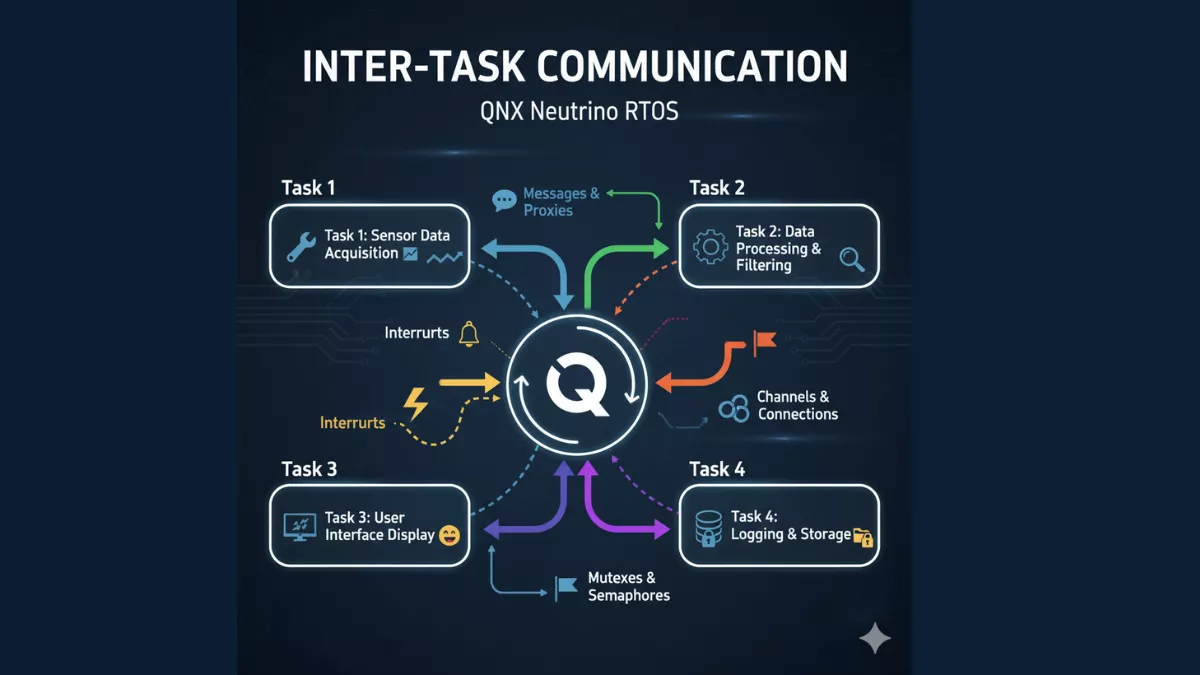
- Real-time or embedded systems with a single core: If tasks need strict timing, too much context switching in a single-core CPU can introduce jitter or latency.
- Systems with many tasks sharing one core: The switching rate increases and overhead becomes non-trivial. (Server Fault)
- Systems where cache/TLB behaviour matters: Frequent context switching in a single-core CPU can degrade cache/TLB efficiency, slowing things down.
How to manage / reduce context switching in a single-core CPU?
Here are some friendly tips:
- Keep task count reasonable: Fewer runnable tasks means fewer switches.
- Use appropriate time slice lengths: Too short → excessive switching; too long → responsiveness suffers.
- Consider CPU affinity (though on a single core it’s trivial) and avoid wasting cycles in switching.
- Avoid tasks constantly blocking/unblocking or forcing preemption if you can manage scheduling logic.
- Monitor context switch rate: If you see high context switching in a single-core CPU (switches per second very high) and performance is bad, you may have a scheduling or task‐design issue. (Netdata)
Why the phrase “context switching in a single-core CPU” matters as a keyword
Because many people talk about context switching in general, but focusing on a single core highlights that you don’t have multiple cores doing true parallel work. The mechanics and the cost matter a bit differently. By using “context switching in a single-core CPU” as the primary keyword, you explicitly capture the scenario where time-slicing and task switching matter the most.
Recap
So here’s your takeaway:
- Context switching in a single-core CPU is the act of saving one task’s state and loading another’s on a processor that has only one execution core.
- It’s essential for multitasking on single-core systems.
- It introduces overhead, mainly through register/context saves/restores, cache/TLB inefficiency, and switching delay.
- It’s manageable: fewer tasks, smarter scheduling, monitoring help.
- It’s especially relevant in embedded, real-time, or constrained systems where a single core must juggle many tasks.
Advantages of Context Switching in a Single-Core CPU
So why even bother with context switching in a single-core CPU? There are some clear benefits that make multitasking possible even with just one core:
- Multitasking illusion – You can run multiple programs “at once,” even though it’s one core. This is the biggest advantage of context switching in a single-core CPU.
- Better CPU utilization – When one process waits for I/O, another can use the CPU.
- Improved responsiveness – The OS can quickly switch between apps, making the user feel everything’s smooth.
- Priority management – Critical tasks can preempt others through context switching in a single-core CPU.
- Fairness among processes – Every process gets some CPU time instead of one process hogging the entire core.
So basically, context switching in a single-core CPU keeps your system balanced and responsive — even though it’s technically doing one thing at a time.
Disadvantages of Context Switching in a Single-Core CPU
Of course, there’s no free lunch. Context switching in a single-core CPU also brings a few downsides you should care about:
- Performance overhead – Saving and loading CPU states takes time, eating up cycles.
- Cache loss – Each context switch may flush CPU caches and TLB entries, lowering performance.
- Increased latency – If switching happens too often, tasks take longer to complete.
- Complex OS design – Handling smooth context switching in a single-core CPU requires smart scheduling.
- Power consumption – Frequent switches can slightly increase energy use.
In short, too much context switching in a single-core CPU slows things down instead of helping.
Real-Time Applications of Context Switching in a Single-Core CPU
Real-time systems — like those in embedded electronics — rely heavily on context switching in a single-core CPU. Here’s how it plays out in real life:
- Automotive systems – In vehicles, a single-core microcontroller switches between sensor reading, engine control, and safety monitoring tasks.
- Medical devices – Pacemakers or monitors handle sensor data, display output, and alarms using context switching in a single-core CPU.
- Industrial control – PLCs run multiple control loops through time-sliced context switching.
- Consumer electronics – Simple IoT devices use context switching in a single-core CPU to alternate between connectivity, sensor data, and display updates.
- Audio systems – Managing playback, input, and signal processing on one processor core depends on context switching.
So, context switching in a single-core CPU isn’t just a theory—it’s what keeps real devices working efficiently in the real world.
Simple C Example: Context Switching in a Single-Core CPU (Simulated)
This example simulates context switching in a single-core CPU using basic structures and manual task switching logic. It’s simplified but shows the concept clearly:
#include <stdio.h>
#include <ucontext.h>
#include <unistd.h>

ucontext_t task1, task2, main_context;

void function1() {
    for (int i = 0; i < 3; i++) {
        printf("Task 1 running (Iteration %d)\n", i + 1);
        sleep(1);
        swapcontext(&task1, &task2); // Context switch
    }
}

void function2() {
    for (int i = 0; i < 3; i++) {
        printf("Task 2 running (Iteration %d)\n", i + 1);
        sleep(1);
        swapcontext(&task2, &task1); // Context switch
    }
}

int main() {
    getcontext(&task1);
    task1.uc_stack.ss_sp = malloc(8192);
    task1.uc_stack.ss_size = 8192;
    task1.uc_link = &main_context;
    makecontext(&task1, function1, 0);

    getcontext(&task2);
    task2.uc_stack.ss_sp = malloc(8192);
    task2.uc_stack.ss_size = 8192;
    task2.uc_link = &main_context;
    makecontext(&task2, function2, 0);

    // Start Task 1
    swapcontext(&main_context, &task1);

    printf("All tasks completed.\n");
    return 0;
}
Explanation
getcontext(),makecontext(), andswapcontext()simulate context switching in a single-core CPU at the user level.- Each function runs, pauses, and switches to the other — just like a scheduler would.
- On a real OS, the kernel handles saving CPU registers, program counters, and stack pointers during context switching in a single-core CPU.
FAQs on Context Switching in a Single-Core CPU
1. What is context switching in a single-core CPU in simple terms?
It’s the process of saving one task’s state and loading another’s, allowing multitasking on one CPU core.
2. Does context switching in a single-core CPU happen automatically?
Yes, it’s managed by the operating system scheduler when time slices expire or I/O interrupts occur.
3. How long does context switching in a single-core CPU take?
It depends on the OS and CPU architecture — typically a few microseconds.
4. Is context switching in a single-core CPU the same as multitasking?
Not exactly. Multitasking is the outcome; context switching is the mechanism that makes it happen.
5. Can we reduce context switching in a single-core CPU?
Yes. By optimizing time slices, reducing blocking operations, or merging small tasks into larger ones.
6. Why is context switching important in embedded systems?
Because many embedded devices use a single core and rely on context switching to run multiple tasks efficiently.
7. What’s the difference between process and thread context switching in a single-core CPU?
Thread switching is lighter since threads share memory; process switching saves more data (like page tables).
Final Thoughts
Context switching in a single-core CPU is what gives life to multitasking. It’s how one processor core manages multiple tasks, keeps your apps responsive, and maintains system balance. Sure, it has overhead — but without it, you’d only ever run one thing at a time.
In embedded, real-time, and resource-limited systems, mastering context switching in a single-core CPU is key to designing efficient and responsive software.


Mr. Raj Kumar is a highly experienced Technical Content Engineer with 7 years of dedicated expertise in the intricate field of embedded systems. At Embedded Prep, Raj is at the forefront of creating and curating high-quality technical content designed to educate and empower aspiring and seasoned professionals in the embedded domain.
Throughout his career, Raj has honed a unique skill set that bridges the gap between deep technical understanding and effective communication. His work encompasses a wide range of educational materials, including in-depth tutorials, practical guides, course modules, and insightful articles focused on embedded hardware and software solutions. He possesses a strong grasp of embedded architectures, microcontrollers, real-time operating systems (RTOS), firmware development, and various communication protocols relevant to the embedded industry.
Raj is adept at collaborating closely with subject matter experts, engineers, and instructional designers to ensure the accuracy, completeness, and pedagogical effectiveness of the content. His meticulous attention to detail and commitment to clarity are instrumental in transforming complex embedded concepts into easily digestible and engaging learning experiences. At Embedded Prep, he plays a crucial role in building a robust knowledge base that helps learners master the complexities of embedded technologies.