Top Arduino interview questions for beginners to experienced engineers. Covers concepts, debugging, projects, and real-world applications.
Arduino is one of the most widely used embedded platforms for learning, prototyping, and even production-grade solutions. Because of its simplicity and flexibility, Arduino-based questions are commonly asked in embedded software interviews, electronics interviews, and IoT roles.
This article provides a complete collection of Arduino interview questions, carefully structured from beginner to expert level, including hardware, programming, peripherals, memory, communication protocols, debugging, and real-world design challenges.
Whether you are a student, fresher, or experienced embedded engineer, this guide will help you prepare confidently.
Why These Arduino Questions Matter in Interviews
Interviewers are not just testing Arduino syntax. They want to understand:
- How you think
- How you debug
- How well you understand hardware–software interaction
- Whether you can build reliable real-world systems
Knowing answers to these questions shows strong embedded fundamentals, which easily transfer to STM32, ESP32, PIC, AVR, and ARM Cortex MCUs.
Arduino Interview Questions :
BEGINNER LEVEL : Arduino Basics
- What is Arduino?
- What are the main components of an Arduino board?
- What is the difference between Arduino Uno, Nano, and Mega?
- What microcontroller is used in Arduino Uno?
- What is the operating voltage of Arduino Uno?
- What is the clock frequency of Arduino Uno?
- What is the difference between microcontroller and microprocessor?
- What are digital pins in Arduino?
- What are analog pins in Arduino?
- What is the resolution of Arduino ADC?
- What is the purpose of the
setup()function? - What is the purpose of the
loop()function? - How many times does
setup()run? - How many times does
loop()run? - What is a sketch in Arduino?
- What language is used to program Arduino?
- Is Arduino C or C++?
- What is the role of the Arduino IDE?
- What is bootloader in Arduino?
- What happens when you upload a sketch?
- What is the difference between USB and barrel jack power?
- What is VIN pin?
- What is GND?
- What happens if you power Arduino with more than 5V?
- What is the maximum current per GPIO pin?
- What is the purpose of onboard LED?
- Why is pin 13 commonly used?
- What is
pinMode()? - What is
digitalWrite()? - What is
digitalRead()? - What is
analogRead()? - What is
analogWrite()? - Why is
analogWrite()not true analog? - What is PWM?
- Which Arduino pins support PWM?
- What is the duty cycle?
- What is the default PWM frequency?
- What is a delay function?
- What is
delay()? - Why should
delay()be avoided? - What is
millis()? - What is
micros()? - What is baud rate?
- What is Serial Monitor?
- What is
Serial.begin()? - What is
Serial.print()? - Difference between
Serial.print()andSerial.println() - What is the default serial baud rate?
- What happens if baud rates mismatch?
- What is pull-up resistor?
- What is internal pull-up in Arduino?
- How do you enable internal pull-up?
- What is debounce?
- Why is switch debouncing needed?
- What is breadboard?
- What is jumper wire?
- What is short circuit?
- What happens if GND and VCC are shorted?
- Why is resistor used with LED?
- What happens if LED is connected without resistor?
INTERMEDIATE LEVEL : Arduino Programming & Peripherals
- What is the memory size of Arduino Uno?
- What is Flash memory?
- What is SRAM?
- What is EEPROM?
- Difference between Flash, SRAM, and EEPROM
- Where is the program stored?
- Where are variables stored?
- What happens when SRAM overflows?
- What is stack in Arduino?
- What is heap?
- What causes stack overflow?
- What is global variable?
- What is local variable?
- What is static variable?
- What is volatile keyword?
- When should volatile be used?
- What happens if volatile is not used?
- What is ISR?
- What is interrupt?
- What is polling?
- Difference between polling and interrupt
- What are external interrupts in Arduino?
- Which pins support external interrupts?
- What is
attachInterrupt()? - What is interrupt latency?
- Can
delay()be used inside ISR? - Can Serial be used inside ISR?
- What is timer in Arduino?
- How many timers are there in Arduino Uno?
- What is Timer0 used for?
- What is Timer1?
- What is Timer2?
- What is prescaler?
- What is timer overflow?
- What is timer compare match?
- How PWM is generated internally?
- What is hardware PWM?
- What is software PWM?
- Difference between hardware and software PWM
- What is watchdog timer?
- Why watchdog is used?
- How to enable watchdog?
- What happens when watchdog resets?
- What is I2C?
- What are SDA and SCL?
- What is I2C address?
- What is master and slave?
- What is clock stretching?
- What is pull-up resistor in I2C?
- What happens if pull-ups are missing?
- What is SPI?
- What are MOSI, MISO, SCK, SS?
- Difference between SPI and I2C
- What is SPI clock polarity?
- What is SPI clock phase?
- What is UART?
- Difference between UART and USART
- What is full-duplex?
- What is half-duplex?
- What is RX and TX?
- How many UARTs are there in Arduino Uno?
- What is SoftwareSerial?
- Limitations of SoftwareSerial
- What is ADC reference?
- What is
AREFpin? - What is internal reference voltage?
- What is sensor noise?
- How to filter noisy ADC values?
- What is moving average filter?
- What is low-pass filter?
- What is oversampling?
- What is calibration?
- What is sensor linearity?
- What is blocking code?
- What is non-blocking code?
- What is state machine?
- Why state machine is useful?
- What is finite state machine?
- What is cooperative multitasking?
- What is Arduino Scheduler?
- What is FreeRTOS?
- Can FreeRTOS run on Arduino?
- Difference between Arduino and RTOS
- What is task?
- What is context switch?
- What is priority inversion?
- What is semaphore?
- What is mutex?
- What is queue?
- What is deadlock?
ADVANCED LEVEL : Hardware, Optimization & Architecture
- What happens when Arduino powers ON?
- What is reset vector?
- What is fuse bit?
- What is brown-out detection?
- What is clock source in Arduino?
- Internal vs external oscillator
- What happens if clock fails?
- What is bootloader section?
- How to remove bootloader?
- What is bare-metal programming?
- Arduino vs bare-metal programming
- What is register-level programming?
- What is DDR register?
- What is PORT register?
- What is PIN register?
- Difference between
PORTx,PINx,DDRx - How to toggle pin using register?
- How much faster is register access?
- What is inline function?
- What is macro?
- Macro vs inline function
- What is compiler optimization?
- What is -O0, -O1, -O2, -Os?
- What is code size optimization?
- What is speed optimization?
- What is memory alignment?
- What is bit manipulation?
- Why use bit masking?
- What is atomic operation?
- How to make code atomic?
- What is critical section?
- How to protect shared data?
- What is race condition?
- What is reentrancy?
- What is stack corruption?
- What is heap fragmentation?
- Why dynamic memory is dangerous in Arduino?
- Why
malloc()is discouraged? - What is memory leak?
- How to detect memory leak?
- What is PROGMEM?
- Why use PROGMEM?
- What is F() macro?
- What happens if SRAM exhausts?
- How to debug SRAM issues?
- What is linker?
- What is ELF file?
- What is HEX file?
- What is map file?
- How to analyze map file?
EXPERT LEVEL : Debugging, Real-World & Failure Analysis
- Why Arduino code works sometimes and fails sometimes?
- How to debug Arduino without debugger?
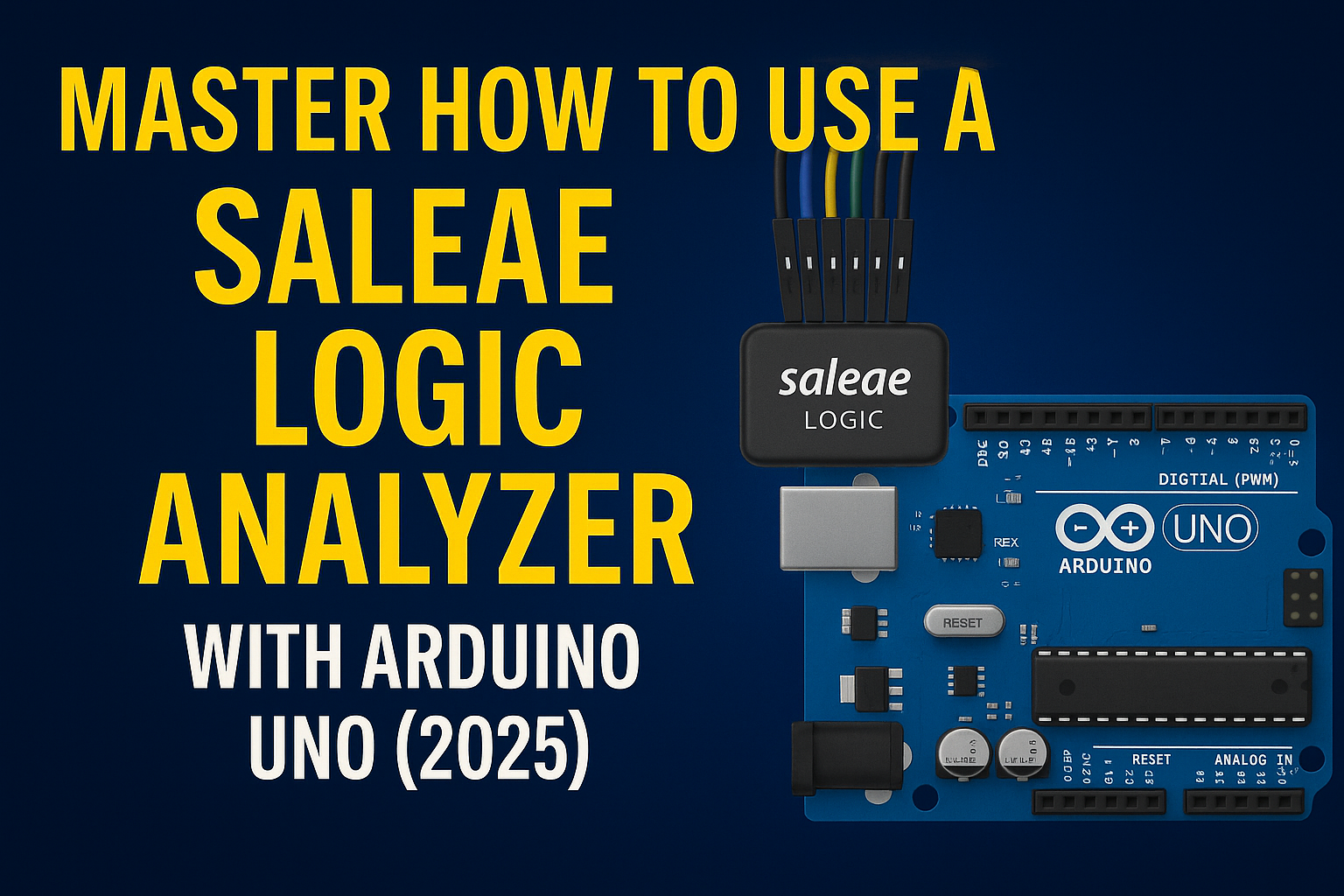
- What is logic analyzer?
- What is oscilloscope?
- How to debug I2C issues?
- How to debug SPI issues?
- How to debug UART issues?
- What causes random resets?
- How to identify watchdog reset?
- What causes brown-out reset?
- What causes bootloader corruption?
- How to recover bricked Arduino?
- What is EMI?
- How EMI affects Arduino?
- How to reduce EMI?
- What is grounding issue?
- What is ground loop?
- Why common ground is important?
- What happens if grounds are not common?
- How to protect GPIO pins?
- What is ESD?
- How to protect from ESD?
- What is latch-up?
- How to avoid latch-up?
- What is power sequencing?
- Why power sequencing matters?
- How to design reliable Arduino hardware?
- What is decoupling capacitor?
- Why place capacitors near VCC?
- What is bulk capacitor?
- What happens if decoupling is missing?
- What is thermal issue?
- How overheating affects MCU?
- What is derating?
- What is MTBF?
- What is fault-tolerant design?
- How to design fail-safe system?
- What is redundancy?
- What is watchdog window mode?
- How to log errors in Arduino?
- What is persistent fault logging?
- How to store crash data?
- How to implement software reset?
- Difference between reset and restart
- What is firmware update?
- How OTA works in Arduino?
- What is bootloader security?
- How to protect firmware?
- What are real-time constraints?
- Arduino vs STM32 in production?
10 strong Arduino project ideas :
1. Smart LED Controller (Beginner)
Description:
Control LED brightness and ON/OFF using a push button and PWM. Add multiple modes like blink, fade, and breathing effect.
Key Concepts Learned:
- GPIO
- PWM
millis()(non-blocking delay)- State machine basics
Why Interviewers Like It:
Tests basic Arduino knowledge + clean coding practices.
2. Temperature & Humidity Monitoring System
Description:
Use DHT11/DHT22 sensor to read temperature and humidity and display values on Serial Monitor or LCD/OLED.
Key Concepts Learned:
- Sensor interfacing
- Timing constraints
- Data validation
- Library usage
Interview Angle:
“How do you handle sensor delay and invalid readings?”
3. Digital Voltmeter using Arduino
Description:
Measure external voltage using Arduino ADC and voltage divider circuit.
Key Concepts Learned:
- ADC
- Voltage divider
- ADC resolution & reference
- Calibration
Interview Angle:
“How do you improve ADC accuracy?”
4. Password-Based Door Lock System
Description:
Create a keypad-based security system that controls a relay/servo for door locking.
Key Concepts Learned:
- Keypad scanning
- EEPROM (store password)
- State machine
- Security basics
Interview Angle:
“How do you protect stored passwords?”
5. Smart Traffic Light Controller
Description:
Implement a real-world traffic light system using timers and states (RED, YELLOW, GREEN).
Key Concepts Learned:
- Finite State Machine (FSM)
- Timers
- Non-blocking design
Interview Angle:
“Why FSM is better than delay-based logic?”
6. Real-Time Clock (RTC) Based Alarm System
Description:
Use RTC (DS3231) to trigger alarms or events at specific times.
Key Concepts Learned:
- I2C communication
- Timekeeping
- Low-power concepts
Interview Angle:
“How does RTC keep time when power is off?”
7. Arduino Data Logger (SD Card)
Description:
Log sensor data to an SD card with timestamp.
Key Concepts Learned:
- SPI
- File systems (FAT)
- Memory management
- Error handling
Interview Angle:
“What happens if SD card is removed during write?”
8. Smart Home Automation System
Description:
Control lights, fan, and appliances via Bluetooth/Wi-Fi using mobile app.
Key Concepts Learned:
- UART / Wi-Fi
- Command parsing
- Modular code design
Interview Angle:
“How do you design scalable command handling?”
9. Watchdog-Protected Embedded System (Advanced)
Description:
Implement watchdog timer to auto-reset Arduino if software hangs.
Key Concepts Learned:
- Watchdog timer
- Fault detection
- System reliability
Interview Angle:
“How do you debug unexpected resets?”
10. Mini RTOS-Based Task Scheduler (Expert)
Description:
Create a lightweight cooperative scheduler or use FreeRTOS on Arduino to manage multiple tasks.
Key Concepts Learned:
- Multitasking
- Task scheduling
- Semaphores & queues
- Real-time constraints
Interview Angle:
“Why Arduino is not truly real-time?”
BONUS: Industry-Level Project Ideas
- Arduino-based Battery Management System (BMS)
- I2C Bus Analyzer using Arduino
- Bootloader-level LED diagnostics
- Power-failure safe EEPROM logger
- Sensor fault detection system
How to Present These Projects in Interviews
For each project, always explain:
- Problem statement
- Hardware used
- Software architecture
- Challenges faced
- Optimizations done
- Debugging approach
- Future improvements
Conclusion
Arduino is more than just a beginner platform—it is a gateway into embedded systems engineering. Interviewers use Arduino-based questions to evaluate how well you understand core embedded concepts, not just APIs.
If you master:
- Arduino fundamentals
- Memory and timing
- Interrupts and communication
- Debugging and optimization
You are not just preparing for an Arduino interview you are preparing for any embedded system role.
Frequently Asked Questions (FAQ) : Arduino Interview Preparation
1. Is Arduino enough to crack embedded system interviews?
Arduino is sufficient for entry-level and intermediate embedded interviews if you understand hardware concepts, memory, interrupts, timers, and debugging. Interviewers focus more on fundamentals than the board itself.
2. Which Arduino board should I prepare for interviews?
The Arduino Uno is the most commonly used board in interviews. Once fundamentals are clear, you can easily transition to Nano, Mega, ESP32, or STM32.
3. Do interviewers ask Arduino coding questions?
Yes. Interviewers often ask:
- LED blink without
delay() - Button debouncing logic
- Interrupt-based examples
- Timer or PWM based problems
They may also ask you to explain code flow instead of writing full programs.
4. How important is debugging knowledge in Arduino interviews?
Debugging knowledge is extremely important. Many interview questions focus on:
- Random resets
- Serial not working
- I2C communication failure
- Watchdog resets
- Power and grounding issues
Knowing how to debug matters more than writing code.
5. Is Arduino used in real-world products?
Arduino is mostly used for prototyping and learning, but the concepts learned are directly applicable to industrial MCUs like STM32, NXP, TI, and ESP.
6. Should I learn register-level programming for Arduino interviews?
Yes, especially for experienced roles. Interviewers like candidates who understand:
- DDR, PORT, PIN registers
- Performance optimization
- Hardware control without libraries
7. How much electronics knowledge is required for Arduino interviews?
Basic electronics knowledge is required, including:
- Resistors, LEDs
- Pull-up and pull-down resistors
- Voltage divider
- Decoupling capacitors
- Power supply basics
8. What common mistakes should I avoid in Arduino interviews?
- Overusing
delay() - Not understanding memory limitations
- Ignoring power and grounding
- Using dynamic memory blindly
- Not explaining debugging steps clearly
9. Can Arduino help me move to STM32 or ARM Cortex MCUs?
Yes. Arduino builds a strong foundation in:
- Embedded C/C++
- Timers and interrupts
- Communication protocols
- Debugging mindset
Transitioning to STM32 becomes much easier afterward.
10. How should I prepare Arduino projects for interviews?
Always explain:
- Problem statement
- Hardware selection
- Software architecture
- Challenges faced
- Debugging approach
- Optimization techniques
- Possible improvements
This shows real engineering thinking.
Read More about Process : What is is Process
Read More about System Call in Linux : What is System call
Read More about IPC : What is IPC


Mr. Raj Kumar is a highly experienced Technical Content Engineer with 7 years of dedicated expertise in the intricate field of embedded systems. At Embedded Prep, Raj is at the forefront of creating and curating high-quality technical content designed to educate and empower aspiring and seasoned professionals in the embedded domain.
Throughout his career, Raj has honed a unique skill set that bridges the gap between deep technical understanding and effective communication. His work encompasses a wide range of educational materials, including in-depth tutorials, practical guides, course modules, and insightful articles focused on embedded hardware and software solutions. He possesses a strong grasp of embedded architectures, microcontrollers, real-time operating systems (RTOS), firmware development, and various communication protocols relevant to the embedded industry.
Raj is adept at collaborating closely with subject matter experts, engineers, and instructional designers to ensure the accuracy, completeness, and pedagogical effectiveness of the content. His meticulous attention to detail and commitment to clarity are instrumental in transforming complex embedded concepts into easily digestible and engaging learning experiences. At Embedded Prep, he plays a crucial role in building a robust knowledge base that helps learners master the complexities of embedded technologies.